Search This Blog

Sunday, December 11, 2022

SOIL & WATER: the foundation of life

In September 2020, Elemental Impact (Ei) announced the Nature Prevails platform with the Regeneration in ACTION (RiA) Magazine article, Nature Prevails: an new Elemental Impact platform, to complement the Soil Health and Water Use | Toxicity platforms. Within the Nature Prevails premise, the Earth heals herself and nurtures renewed life forms, no matter the calamity caused by humans, natural disasters, or extraterrestrial activities.

With a commitment to align work with Nature, Ei defined The Principles of Nature with three broad categories:

  • Diversity
  • Dynamic Balance & Nutrition Cycles
  • Necessity of Cover & Ability to Roam
Bigger than Us podcast  promo graphic
Bigger than Us podcast
promo graphic
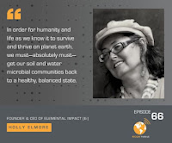
Healthy, balanced water and soil microbial communities are the foundation to life on Earth and integral to the Principles of Nature. As featured in her May 2020 Bigger than Us podcast interview, Ei Founder Holly Elmore is known for the following quote:
In order for life as we know it to survive and thrive on planet Earth, we must - absolutely must - get our soil and water microbial communities back to a healthy, balanced state.

A Sacred Marriage 
Soil and water are in a sacred marriage and support life on Earth and must be addressed in unison. Healthy well-structured soil is a living, breathing ecosystem and retains significantly more water than depleted soil. Additionally, healthy soil filters water and removes contaminates as it flows to aquifers. In return, water keeps a healthy soil ecosystem hydrated.

Insects are the base of predator/prey hierarchy, integral to the natural ecosystem foundation, and essential to supporting the Earth’s life web. Many insects, such as dragonflies and mosquitoes, live their juvenile or larva stage under water and their adult lives on land supporting plants and soil systems; aquatic larva is similar to a butterfly's caterpillar stage. 

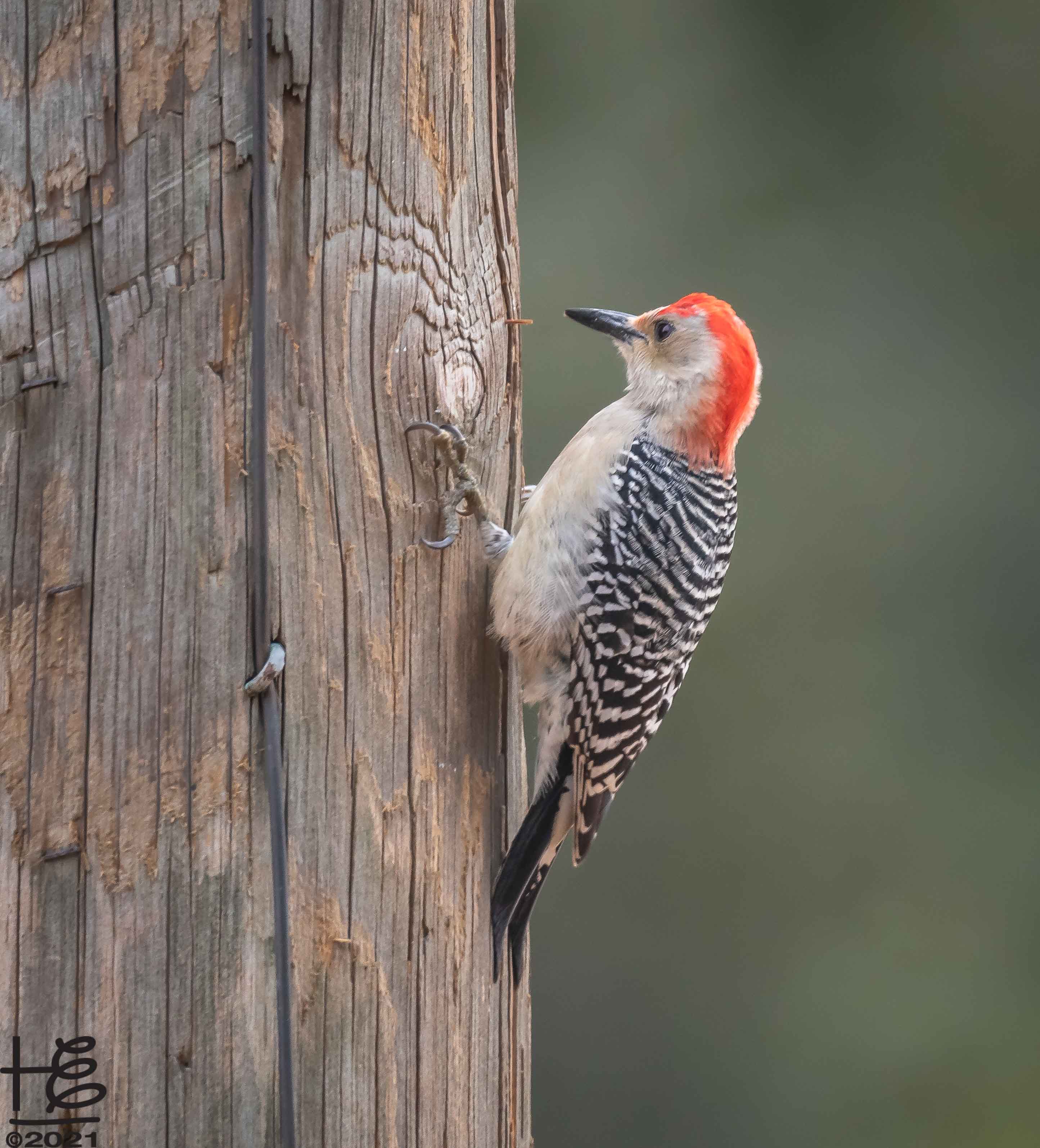
A red-bellied woodpecker feeds on
tasty insects living in the utility pole.
Photo credit: Holly Elmore Images
Insect Apocalypse
At the base of the prey hierarchy, insects are food for fish, mammals, reptiles, amphibians, and birds. In addition to recycling soil-system nutrients, insects play an essential role in the decomposition portion of nature’s circular-life cycle.

Since the 1970’s, the Earth’s insect population suffered from severe population declines as well as loss of diversity.

The NY Times 2018 article, The Insect Apocalypse Is Here. What does it mean for the rest of life on Earth?, reported: The German study found that, measured simply by weight, the overall abundance of flying insects in German nature reserves had decreased by 75 percent over just 27 years. If you looked at midsummer population peaks, the drop was 82 percent.

According to the November 2019 Somerset Wildlife Trust Insect Declines and Why They Matter Report by Professor Dave Goulson, 41% of insect species are threatened with extinction.

Thus, the Insect Apocalypse is well underway.

Contributing factors to the demise of insect populations include:
  • Common thread-waisted wasp
    feeds on a native stoke aster bloom.
    Photo credit: Holly Elmore Images
    Prolific use of pesticides in commercial and residential landscapes, corporate and municipal-grounds maintenance, and industrial agriculture.
  • Loss of habitat due to urbanization, transportation systems, farming, and landscape-maintenance practices.
  • Infiltration of non-native plants; insects evolved to thrive on native plants, and non-native plants are often not food sources for local populations.
  • Intangible pollution, including artificial light, noise (leaf blowers,) and electromagnetic fields.
According to American biologist Edward O. Wilson: 

Insects are the little things that run the world!

Evolution Towards Soil Integrity
The RiA Magazine article, From Organic Certification to Regenerative Agriculture to Rewilding Landscapes: an evolution towards soil integrity, establishes that organic certification is a first, yet far from final, step in achieving healthy, balanced soil ecosystems.

A vibrant young food forest thrives within 
the backyard of a urban home.
Photo credit: Holly Elmore Images
Organic certification prohibits the use of "cides*," GMO (genetically modified organism) seeds, and petrochemical fertilizers. Thus, organic food is non-GMO and reasonably "toxin-free" Yet, organic certification does not address soil health or the nutritional value of food produced on the certified farm. Often, organic food lacks in flavor and nutrition due to unhealthy soil.

In addition to adhering to organic-farming practices, regenerative agriculture focuses on restoring and maintaining a healthy-soil ecosystem. Diverse crops, including cover crops, and no-till farming practices are basic regenerative-agriculture protocol. Food grown on regenerative farms and home gardens is nutritious and delicious due to thriving soil ecosystems.

As important as it is to restore healthy-soil systems, produce nutritious food (for human & wildlife,) and drawdown carbon, regenerative agriculture does not focus on native plants. Thus, it often contributes to, versus alleviates, the insect apocalypse. 

Beyond regenerative agriculture and landscape practices, rewilding land restores the natural ecosystem that evolved over thousands of years. Rewilding land requires the restoration of native plants and cultivates food for indigenous insects. Strong insect populations are the foundation for restoring wildlife-predator/prey hierarchies that once thrived prior to human intrusion.

In his New York Times bestseller, Nature’s Best Hope: A New Approach to Conservation that Starts in your Yard, Doug Tallamy encourages citizens to rewild their yards via replacing toxic lawns with native plants that support local insect populations.

Inherent within rewilding urban landscapes are three primary benefits: 
  • Restoration of vibrant soil ecosystems and urban-wildlife populations; production of nutritious food destined for wildlife and humans.
  • Drawdown of carbon from the atmosphere into the soils via plant photosynthesis.
  • Establishment of food-secure neighborhoods within a community.
* "cides" are defined as herbicides, pesticides, insecticides, and fungicides.

Homegrown National Park
Via his recent book, Bringing Nature Home, how you can sustain wildlife with native plants, Doug announces his Homegrown National Park (HNP) initiative in partnership with Michelle Alfandari, business development consultant, entrepreneur, small business owner, and retimer.

HNP is a grass roots call-to-action to regenerate biodiversity. According to Doug,

In the past, we have asked one thing of our gardens: that they be pretty. Now they have to support life, sequester carbon, feed pollinators, and manage water.

National awareness is HNP's product along with a request for the below actions on the more than 40-million acres of private lawn in the United States:

  1. Reduce lawns.
  2. Plant more native plants.
  3. Remove invasive and/or non-native plants.
The What's the Rush 24-minute video by Doug is a superb overview of the critical status of the insect population along with simple lifestyle changes by individuals that collectively make a huge difference.

Local Food Security
In addition to the 
Insect Apocalypse, local food security is a a severe challenge for humanity. Depleted soils, broken food systems, and supply-chain challenges contribute to food insecurity for rural and urban populations.

According to the U.S. Department of Human and Health Services, in 2020, 13.8 million households were food insecure at some point during the year. The World Food Programme made a dire announcement:

2022: a year of unprecedented hunger
As many as 828 million people go to bed hungry every night. The number of those facing acute food insecurity has soared - from 135 million to 345 million - since 2019. A total of 49 million people in 49 countries are teetering on the edge of famine.

A regenerative home garden; beds are constructed
with tree trunks compliments of Hurricane Ian.
Photo credit: Holly Elmore Images
Similar to Doug's grass-roots approach to regenerating insect populations, Ei encourages individuals to embrace permaculture-oriented landscaping. Rather than follow the in-depth permaculture protocol, Ei provides a simple permaculture-oriented-landscape definition: if the plant is not native, it must produce human food or other direct benefits.

During the Great Depression (1929 - 1939,) local gardens provided a means of survival. According to the Gardens Role in Great Depression Research Paper, governments introduced relief gardening programs to combat emotional stress, poverty, and hunger. The relief gardens were also referred to as vacant-lot gardens, subsistence gardens, or welfare-garden plots.

In World War II (WWII,) the federal government called on citizens to plant victory gardens; nearly 20 million Americans answered the call in the name of patriotism. Victory gardens produced an estimated 9 - 10 million tons of vegetables, the equivalent of the commercial-agriculture-crop production. Thus, victory gardens made a tremendous difference and avoided food-shortage and hunger scenarios.*

Thus, the U.S. has precedent on preventing food insecurity on a mass scale during the Great Depression and WWII via home and vacant-lot gardening. Challenge: both programs were strongly promoted and supported by the U.S. federal government. Without government support, communities, non-profits, and individuals must create a movement for individuals to plant and nurture gardens, instead of lawns, at their homes.

* Facts provided by the Living History Farm, Farming in the 1940's, Victory Farms.

Permaculture-Oriented Landscapes (POL)
In the earlier referenced video, What's the Rush?, Doug refers to POL as ecological landscapes with the following four purposes:

  • Path leads to a banana-compost circle for
    yard debris and kitchen-food waste.
    Photo credit: Holly Elmore Images
    Support food webs, human and wildlife.
  • Sequester carbon.
  • Clean and manage water.
  • Support pollinators.

Ei partners with Zach Zildjian Design Services (ZZ Design) on promoting POL. Per Zach Zildjian, an ecological landscaper, POL have three main components:

  • Food forest (perennial food production.)
  • Vegetable & herb gardens (annual food production.)
  • Compost of landscape debris as well as home-food waste.
Ei Rewilding Urban Landscape Pilots
Black swallowtail caterpillar
devours a parsley plant.
Photo credit: Holly Elmore Images

Beyond regenerative agriculture and landscape practices, rewilding land restores the natural ecosystem that evolved over thousands of years. Rewilding land requires the restoration of native plants and cultivates food for indigenous insects. Strong insect populations are the foundation for restoring healthy predator/prey hierarchies that once thrived prior to human intrusion.

When she returned to her hometown, Sarasota, Florida, after residing in Atlanta for four decades, Holly dedicated her spacious approximately 8,500-square-foot yard to two rewilding pilots. 

The Holly Elmore Images (HEI) Ei Rewilding Urban Landscapes album documents the pilots' progress in a series of photo galleries.

Ei Native-Plant-Landscape Pilot
Native-plant landscapes provide urban wildlife access to food and habitat. When "cide" free, native-plant landscapes provide wildlife a safe haven amid urban life filled with buildings, roadways, and often sterile and/or toxic open areas.

The young front-yard native-plant landscape
thrives as it matures.
Photo credit: Holly Elmore Images
Local wildlife evolved to thrive on native foliage and, in general, do not eat or nest in non-native plants. Additionally, many non-native plants are invasive and choke out native plants, further challenging urban wildlife.

Holly's front yard was designated for only native plants with a focus on food and habitat for local urban wildlife. First steps included removing the non-native, decorative plants from prior residents and smothering the existing grass.

Pamela Callender of Lifelines consulted, designed, purchased the plants, and installed the native-plant landscape on November 18 & 19, 2021 and continues to provide support.

The HEI album, Ei Native-Plant-Landscape Pilot, documents the the front-yard evolution through a series of photo galleries.

Ei Backyard-Permaculture Pilot
Backyard in its "wild state."
Photo credit: Holly Elmore Images
The backyard follows POL practices with an emphasis on human-food-producing plants. A food-waste-compost circle surrounded by banana trees is integral to the design. Thus, the general rule for the backyard landscape: any non-native plants must produce human food 
and/or provide direct soil-ecosystem benefit.

While the front-yard landscape is strictly native plants and was installed over a two-day period, the backyard pilot is an evolutionary process. For nearly nine months, the backyard was permitted to return to its "wild state" with abundant plant diversity; a variety of happy insects frolicked in the knee-high grass infiltrated with flowering plants.

Beginning in early 2021, the backyard was slowly "tamed" with mulched paths, a banana compost circle, a row of native-blueberry bushes under the roof dripline, a pollinator garden, a food forest, and raised herb-garden area with sun protection. Once the invasive carrotwood tree was removed, the south-side yard was opened to ample sunshine and prepped for a vegetable, herb, and edible-flower garden.

Similar backyard view one year later
Photo credit: Holly Elmore Images
No herbicides or soil tilling were used in the taming process; Holly hand-weeded the majority of the areas before prepping for its destination.

ZZ Design oversees the backyard evolution and uses the pilot as a showcase for "what can be done" in a neighborhood scenario.

The HEI album, Ei Backyard-Permaculture Landscape Pilot, documents the backyard's evolution through a series of photo galleries.

Intentional Eating
Renowned journalist and author Michael Pollan's Intentional Eating MasterClass is exceptional; the class substantiates how the act of eating is integrated within establishing healthy water and soil systems and addressing the Insect Apocalypse; in a market-driven economy consumers vote with dollars spent.

In his MasterClass, Michael gives ample homework; the assignments are designed to showcase how one's relationship with food and their related choices impact the environment and societal injustices:
  • What are you eating? - a low-stakes food audit.
  • Identify your values - eating with heart.
  • Grow microgreens - even if you live in a concrete jungle you can witness the magic of nature.
  • Grocery store/neighborhood analysis - not all stores are created equal.
  • Eat with the seasons - for most of human history, people cycled eating along with trips around the sun. What changed?
  • The "Better" food questionnaire - a more meaningful food audit.
  • Track your food sources - be your own ethics inspector. 
In the class, Michael visits an urban-regenerative farm designed to provide nutritious food to residents in a fresh-food-deprived city sector. It was promising to witness how a dilapidated commercial property transformed into a thriving farm regenerating the environment as well as the surrounding neighborhood.

A future article will provide suggestions on how the average consumer can make a difference. The suggestions will range from simple and no-cost / inexpensive tasks to actions that require time and financial investments.

Individual Collective Action
Regenerating soil and water systems, at the microbial and macro levels, is key to sustaining life on Earth. Collective individual action will make a tremendous impact on system restoration and eventual regeneration.

Organizations like the Unitarian Universalist Church (UUC) in Sarasota, Florida are committed to taking action within their community. With a stated soil focus, the UUC Green Team invited Ei and ZZ Design to present at their November monthly meeting. The PPT presentation may be downloaded: Soil: The Foundation of Life.

Please consider taking action in what makes sense in your life, knowing that a key to success is "Taking Baby Steps, Lots and Lots of Baby Steps!"

Tax-deductible donations in any amount are greatly appreciated to support Ei's important work. 

DONATE HERE.


About Elemental Impact:
Elemental Impact (Ei) is a 501(c)3 non-profit founded in 2010 as the home to the Zero Waste Zones, the forerunner in the nation for the commercial collection of food waste for compost. In June 2017, Ei announced the Era of Recycling Refinement was Mission Accomplished and entered the Era of Regeneration. Current focus areas include Nature PrevailsSoil Health | Regenerative Agriculture, and Water Use | Toxicity.

The Regeneration in ACTION Magazine articles, From Organic Certification to Regenerative Agriculture to Rewilding Landscapes: an evolution towards soil integrity and SOIL & WATER: the foundation of life, published to explain and substantiate the importance of Ei’s rewilding urban landscapes work within the Nature Prevails focus area.

The Holly Elmore Images Rewilding Urban Landscapes-album folder documents two active pilots: the Native-Plant Landscape Pilot and the Backyard Permaculture-Oriented Pilot.

MISSION:
To work with industry leaders to create best regenerative operating practices where the entire value-chain benefits, including corporate bottom lines, communities, and the environment. Through education and collaboration, establish best practices as standard practices.

Ei’s tagline – Regeneration in ACTION – is the foundation for Ei endeavors.

The following mantra is at the core of Ei work:

Ei is a creator, an incubator.
Ei determines what could be done that is not being done and gets it done.
Ei brings the possible out of impossible.
Ei identifies pioneers and creates heroes.

For additional information, contact Holly Elmore at 404-510-9336 | holly@elementalimpact.org


Thursday, June 24, 2021

From Organic Certification to Regenerative Agriculture to Rewilding Landscapes: an evolution towards soil integrity

World War II (WWII ) revolutionized manufacturing processes and catapulted personal and commercial markets into an era of increased consumption, convenience, and highly toxic pollutants. 

The Regeneration in ACTION (RiA) Magazine article, Plastics: a double-edged sword, articulates the history of plastic consumption, benefits, and challenges; in WWII plastic manufacturing increased 300% and continued to escalate post-war.

Though it was introduced in the 1930's, synthetic-pesticide use became widespread after WWII. According to LivingHistoryFarm.org:

World War II was the first U.S. war in which diseases – many like typhus and malaria carried by insects – killed fewer people than bullets and bombs. The reason was DDT. The insect killer – or "insecticide" – had been discovered in 1939 and was used extensively by the U.S. military during the war. So, it is no wonder that the postwar period saw the dawning of the chemical age in pesticides.

Then, as today, agriculture uses 75 percent of all pesticides. Between 1947 and 1949, pesticide companies invested $3.8 billion into expanding their production facilities. They were rewarded by huge profits.
Many historians have called this the golden age of chemical pesticides – effective new chemicals were available and of all of the risks and dangers to human health and the environment were not yet known.

During WWII, the United States (U.S.) government built ten plants across the country to manufacture nitrogen-based bombs and other explosives. When the war ended, the plant-production capacity was shifted to petrochemical, nitrogen-based fertilizer manufacturing. Thus, the use of petrochemical fertilizers in farming, along with grounds maintenance and lawn-care practices, exploded in the post-WWII era.

WWII was a catalyst for an era when unforeseen consequences of high-tech development would create toxic environments and devastating scenarios across the globe.

Glyphosate and GMOs
Glyphosate was first patented in 1961 as a Descaling and Chelating Agent and later purchased by Monsanto in 1974. Monsanto branded as Roundup, a powerful herbicide used in home landscapes and commercial agriculture. By 1982, Monsanto scientists were researching Roundup Ready genetically modified seeds for crops resistant to the herbicide. 

In 1996, the first genetically modified crops (soybeans) were planted in the U.S. At the time, glyphosate usage was 3.8% of the total volume of herbicide-active ingredients applied in agriculture (28 million pounds in 1995.) Glyphosate usage boomed over the next decades; usage increased 9-fold in the U.S. and 15-fold worldwide by 2014. A 2016 research study by Food Democracy Now! and The Detox Project found alarming levels of glyphosate in many popular processed food brands. *

Image courtesy of Rich Roll 414 Podcast
According to Dr. Zach Bush, a triple-board certified medical doctor specializing in Internal Medicine, Endocrinology and Metabolism, as well as in Hospice and Palliative care, the human race is in a vast epidemic of chronic inflammation, mainly caused by the prolific use of glyphosate. Dr. Bush attributes the widespread diagnosis of celiac disease to the use of glyphosate within the harvest of wheat. The March 2018 Rich Roll GMOs, Glyphosate & Gut Health interview with Dr. Bush is an excellent introduction to his profound work and perspectives. In a later Rich Roll podcast, Dr. Bush connects soil health with nutritious food production. 

The Institute for Responsible Technology is another respected resource dedicated to the detrimental health impact by the rampant use of glyphosate along with GMOs (genetically modified organisms) in commercial agriculture.

With toxins infiltrating water systems, including drinking water, the atmosphere, the soils, the food system, and nearly every aspect of human existence, health for all life on the planet suffers from continuous exposure to human-created poisons.

* Glyphosate history obtained from The Natural Farmer, the newspaper of the Northeast Organic Farming Association, A Brief History of Glyphosate article.

Environmental Movement
Published in September 1962, Silent Spring by Rachel Carson is credited as the catalyst for the environmental movement. Though it addressed the devastating ramifications of DDT-pesticide use, Silent Spring showcased the far-reaching impact of toxic-chemical use whether for pesticides, herbicides, fungicides, insecticides, or other uses.

The August 2015 Natural Resources Defense Council The Story of Silent Spring: How a courageous woman took on the chemical industry and raised important questions about humankind's impact on nature explains Silent Spring's legacy:

Photo courtesy of Peter Scales
The most important legacy of Silent Spring, though, was a new public awareness that nature was vulnerable to human intervention. Carson had made a radical proposal: that, at times, technological progress is so fundamentally at odds with natural processes that it must be curtailed. Conservation had never raised much broad public interest, for few people really worried about the disappearance of wilderness. But the threats Carson had outlined—the contamination of the food chain, cancer, genetic damage, the deaths of entire species—were too frightening to ignore. For the first time, the need to regulate industry in order to protect the environment became widely accepted, and environmentalism was born.

As the environmental movement grew, awareness of toxic-petrochemical fertilizers' and the "cides'" - herbicides, pesticides, insecticides, and fungicide - impact on human and environmental health was substantiated via well-documented scientific research.

Nature Prevails
Within Elemental Impact 's (Ei) Nature Prevails platform, The Principles of Nature are defined as:

  • Diversity
  • Dynamic Balance & Nutrition Cycles
  • Necessity of Cover & Ability to Roam

The RiA article, Nature Prevails; an action plan, defines The Principles of Nature and explains how human-made systems are ruled by the principles. When humans defy The Principles of Nature. there are often tragic results.

Insect Apocalypse
Insects are integral to the natural ecosystem foundation and essential to supporting the Earth’s life web. At the base of the prey hierarchy, insects are food for fish, mammals, reptiles, amphibians, and birds. In addition to recycling soil-system nutrients, insects play an essential role in the decomposition portion of nature’s circular-life cycle.

A multi-generations of milkweed
beetles at a rewilded park.
Photo courtesy of Holly Elmore Images
Since the 1970’s, the Earth’s insect population suffered from severe population declines as well as loss of diversity.

The NY Times 2018 article, The Insect Apocalypse Is Here. What does it mean for the rest of life on Earth?, reported: The German study found that, measured simply by weight, the overall abundance of flying insects in German nature reserves had decreased by 75 percent over just 27 years. If you looked at midsummer population peaks, the drop was 82 percent.

According to the November 2019 Somerset Wildlife Trust Insect Declines and Why They Matter Report by Professor Dave Goulson, 41% of insect species are threatened with extinction.

Contributing factors to the demise of insect populations include:

  • Prolific use of pesticides in commercial and residential landscapes, corporate and municipal-grounds maintenance, and industrial agriculture.
  • Loss of habitat due to urbanization, transportation systems, farming, and landscape-maintenance practices.
  • Infiltration of non-native plants; insects evolved to thrive on native plants and non-native plants are often not food sources for local populations.
  • Intangible pollution, including artificial light, noise (leaf blowers,) and electromagnetic fields.

Holocene Extinction (sixth mass extinction)
As documented by the November 2019 Science Alert article, Are We Really in a 6th Mass Extinction? Here's The Science, current conditions indicate that the Earth's Holocene extinction, or sixth mass extinction, is well underway. From the article:

A mass extinction is usually defined as a loss of about three quarters of all species in existence across the entire Earth over a "short" geological period of time. Given the vast amount of time since life first evolved on the planet, "short" is defined as anything less than 2.8 million years. 

... The Earth is currently experiencing an extinction crisis largely due to the exploitation of the planet by people. 

The World Wildlife Fund 2020 Living Planet Report states:

A 68% average decline of birds, amphibians, mammals, fish, and reptiles since 1970.

The findings are clear: Our relationship with nature is broken.

Biodiversity – the rich diversity of life on Earth – is being lost at an alarming rate. This loss effects our own health and well-being. Today, catastrophic impacts for people and the planet loom closer than ever.

Though the Holocene extinction is well underway, a tragic outcome may be avoided by aligning human-created systems with The Principles of Nature. 

Increased Predation and Nutrient Deficiency

As stated in the Ei Digital Book, Restoring Pollinator Populations:

Eliminating the use of man-made fertilizers also removes chemical influence which can damage plants. When synthetic fertilizers are applied, plants grow faster than their natural rhythm. Faster growth results in plants with thinner cell membranes that are vulnerable to predation by insects, parasites, and fungus. Healthy, robust plants with thick stalks and leaf-cell membranes are not as enticing for pests.

Thus, the use of petrochemical fertilizers ignites the cycle of pest control, most often via toxic insecticides and pesticides. Unfortunately, pesticides often kill "good bugs" as well as the targeted insects. Additionally, pesticides pollute waterways via farm run-off or by filtering through the soil to the area aquifer.

In 2004, Dr. Donald Davis, a member of the University of Texas at Austin Biochemical Institute, and his team published a study that suggests nutrient decline in garden crops over past 50 years, According to Dr. Davis: 
"Efforts to breed new varieties of crops that provide greater yield, pest resistance, and climate adaptability have allowed crops to grow bigger and more rapidly, but their ability to manufacture or uptake nutrients has not kept pace with their rapid growth. There have likely been declines in other nutrients, too, such as magnesium, zinc, and vitamins B-6 and E, but they were not studied in 1950 and more research is needed to find out how much less we are getting of these key vitamins and minerals."

Soil ecosystems are alive with an intertwined network of fungi, microbial communities, insects, and other small animals working together, often in symbiotic fashion, to nurture plant roots. In return, the plants deliver carbon dioxide, sugars, and other nutrients to the soil system. When the soil ecosystem is healthy, plants produce nutritious food for humans and wildlife.

Healthy cover crops at a regenerative farm.
Photo courtesy of Holly Elmore Images.
Diversity and necessity of cover, two of The Principles of Nature previously mentioned, are essential for a healthy soil ecosystem. Common monocrop farming with neat, barren rows between crops defies nature and deteriorates soil health. Tilling the soil breaks up the soil communication and nutrient-transfer systems governed by fungi networks. 

Per Mother Earth New's article, Mycorrhizal Fungi and Plant Roots: A Symbiotic Relationship, Mycorrhizal fungi help plant roots absorb nutrients and fight off harmful, soil-dwelling predators. In exchange, the fungus receives sugars and nutrients from its host plant. Furthermore: 

At least 80 percent of the plant species on the globe, representing more than 90 percent of all the plant families, are known to form mycorrhizae. In addition to facilitating the transportation of nutrients, at least one kind of mycorrhizal fungus attracts and kills the tiny soil-dwelling arthropods called springtails, a rich source of nitrogen. Other carnivorous fungi capture the superabundant microscopic worms known as nematodes, either with sticky knobs that develop from the hyphae, fine filament meshes, or loops that constrict to snare passing prey — fungal lassoes.

Over the past decades, toxic-chemical additives along with modern-day farming practices significantly compromised soil health, and resulted in nutrient-deficient food. Organic Certification is a strong first step in aligning with The Principles of Nature, yet is far from a final step.

Organic Certification
A focus on organic farming emerged as petrochemical fertilizers and "cides" were introduced to commercial agriculture post WWII. As the environmental movement gained momentum in the 1960's, after Silent Spring's publication, decentralized organic-farming standards were established across the nation. 

In 1990, Congress passed the Organic Foods Production Act (OFPA) to develop a national standard for organic-food and -fiber production. The USDA’s National Organic Program, authorized under OFPA, issued their Final Ruling in October 2002; the ruling established the federal organic-certification program, administered by the respective state departments of agriculture.

Organic certification prohibits the use of "cides," GMO seeds, and petrochemical fertilizers. Thus, organic food is non-GMO and reasonably "toxin-free" Yet, organic certification does not address soil health or the nutritional value of food produced on the certified farm.

Regenerative Agriculture
In addition to adhering to organic-farming practices, regenerative agriculture focuses on restoring and maintaining a healthy soil ecosystem. Diverse crops, including cover crops, and no-till farming practices are basic regenerative-agriculture protocol.

Inherent within soil restoration is increasing the organic matter (carbon) content; thus, regenerative agriculture creates carbon sinks, a designated area that draws down more carbon than is released into the atmosphere. An emerging trend is to incorporate applicable regenerative agriculture protocol into landscape- and grounds-maintenance practices.

In 2017, Ei coined the term urban carbon sinks in the RiA Magazine article, Beyond Sustainability: Regenerative SolutionsAdditionally, the article substantiates regenerative agriculture, and landscape/grounds-maintenance practices as a viable solution for balancing the carbon cycles. The RiA Magazine article, Carbon Crisis: simply a matter of balance, introduces the carbon cycles and compost’s role in restoring balance; the article features John Wick and the Marin Carbon Project.

As important as it is to restore healthy soil systems, produce nutritious food (for human & wildlife,) and drawdown carbon, regenerative agriculture does not focus on native plants. Thus, it often contributes to, versus alleviates, the insect apocalypse. 

Rewilding Landscapes
Beyond regenerative agriculture and landscape practices, rewilding land restores the natural ecosystem that evolved over thousands of years. Rewilding land requires the restoration of native plants and cultivates food for indigenous insects. Strong insect populations are the foundation for restoring healthy predator/prey hierarchies that once thrived prior to human intrusion.

In his New York Times bestseller, Nature’s Best Hope: A New Approach to Conservation that Starts in your Yard, Doug Tallamy encourages citizens to rewild their yards via replacing toxic lawns with native plants that support local insect populations. Caterpillars are a primary food source for many birds and other wildlife. According to Doug, Carolina chickadees must catch 6,240 – 9,120 caterpillars to raise one clutch.

Inherent within rewilding urban landscapes are three primary benefits: 

  • Restoration of vibrant soil ecosystems and urban wildlife populations; production of nutritious food destined for wildlife and humans.
  • Drawdown of carbon from the atmosphere into the soils via plant photosynthesis.
  • Establishment of food-secure neighborhoods within a community.

In the RiA article, Urban Carbon Sinks: Rewilding Urban Landscapes, Ei announced a commitment to Rewilding Urban Landscapes via pilots focused on urban agriculture, lawns, corporate complexes, college and university campuses, highway medians and shoulders, airport land surrounding runways, parks, and other available urban land. For the rewilding pilots, native foliage is planted and cultivated with the exception of human-food producing plants, such as tomatoes.

Pilots are in the development stage with various grant applications underway.

Align with The Principles of Nature
Human ingenuity catapulted the planet into a sixth extinction. Though the scenario appears dire, nature is forgiving as long as her principles are honored. If humans start aligning crafted systems with The Principles of Nature, a new spectrum of probable outcomes materializes and a vibrant, miraculous future is possible.

Tax-deductible donations in any amount are greatly appreciated to support Ei's important work. 

DONATE HERE.


About Elemental Impact:
Elemental Impact (Ei) is a 501(c)3 non-profit founded in 2010 as the home to the Zero Waste Zones, the forerunner in the nation for the commercial collection of food waste for compost. In June 2017, Ei announced the Era of Recycling Refinement was Mission Accomplished and entered the Era of Regeneration. Current focus areas include Nature PrevailsSoil Health | Regenerative Agriculture, and Water Use | Toxicity.

The Regeneration in ACTION Magazine article, From Organic Certification to Regenerative Agriculture to Rewilding Landscapes: an evolution towards soil integrity, published to explain and substantiate the importance of Ei’s rewilding urban landscapes work within the Nature Prevails focus area.

MISSION:
To work with industry leaders to create best regenerative operating practices where the entire value-chain benefits, including corporate bottom lines, communities, and the environment. Through education and collaboration, establish best practices as standard practices.

Ei’s tagline – Regeneration in ACTION – is the foundation for Ei endeavors.

The following mantra is at the core of Ei work:

Ei is a creator, an incubator.
Ei determines what could be done that is not being done and gets it done.
Ei brings the possible out of impossible.
Ei identifies pioneers and creates heroes.

For additional information, contact Holly Elmore at 404-510-9336 | holly@elementalimpact.org

Sunday, May 9, 2021

The Last Unknown, an epic documentary

The Last Unknown (TLU,) is an acclaimed discovery+ documentary by award-winning photographer, author, film and television producer, conservationist, and educator Ian Shive; TLU engages the audience on an epic adventure in the Aleutian Islands (AI). Located in the freezing sea between Siberia and Alaska, the AI are one of the wildest, most pristine, and remote places on Earth. The AI showcase natural wonders, treacherous existence, and astounding beauty, mostly untouched by human interference.

Ian and his four-person crew joined the United States (U.S.) Fish & Wildlife Service's (FWS) on board the Tiglax research vessel as they traversed one of the wildest places on the planet. Most of the remote islands are completely devoid of human intrusion with no docks, trails, or services; access is challenging and weather may prohibit a safe landing. TLU offers a glimpse of Nature in her untamed state and leaves the viewer in a state of awe.

Discovery Executive Vice President of Multiplatform Programming, Factual & Head of Content, Science Scott Lewers validates Discovery's investment in TLU:

“Ian’s journey takes viewers to a part of the world that few people will ever get to see in real life. Showcasing the vital work being done to protect our diverse wildlife and ecosystem is an important part of Discovery’s heritage and we are thrilled to share this latest addition to the vast collection of natural history documentaries available on discovery+.” 

The FWS research assesses the overall ecosystem health via evaluating the marine-mammal and bird-population status. When it feeds at sea, a bird essentially captures thousands of ocean samples with each bite. By studying the bird populations, scientists examine huge swatches of ocean health. Vibrant predator populations are indicators of strong prey populations and ocean-marine life.

During their three-week voyage, Ian and his crew face perilous elements as they visit five of the AI and tell the story of untamed places where no one, or at least only a few, have ventured.

Auklet swarm at sea
Photo: Tandem Stills + Motion
Island Explorations
The first stop is Akutan Island where the crew witnesses an endangered Steller sea lion colony. Beginning in the 1970's and accelerating in the 1980's and 1990's, the rapid decline of the Steller sea lion population is most likely due to depleted food sources from over fishing.

On Kiska Island, Ian and his crew find an exceptionally healthy auklet population. According to the Audubon Kiska Island Colonies page, Kiska Island is home to seven seabird colonies consisting of fourteen seabird species and an estimated 3,333,961 birds. In TLU, the footage of the huge auklet swarm undulating in the sky within geometric patterns was breathtaking and a phenomena few humans will ever experience.

Cynthia Martinez, Chief of the National Wildlife Refuge System (NWRS) for the FWS, confirms the amazing experience:

"Watching swirling clouds of tiny seabirds at Kiska Island is one of the most awe-inspiring wildlife spectacles I have ever seen. The thousands of islands that are home to millions of birds and marine mammals make the Alaska Maritime National Wildlife Refuge an iconic example of our National Wildlife Refuge System. I’m excited that viewers will get to experience the beauty of the Aleutian Chain, the traditional homelands of the Unangax̂ people."

Though generally devoid of human activity, remnants of World War II (WWII) occupation by the Japanese survive in the harsh conditions on East Kiska Islandthe crash-landing site of a B24 in December 1942 is one of the WWII relics. Additionally, Ian explores one of the Japanese underground bunkers dug into the hillside.

FWS field techs Sarah Youngren and Dan Rapp welcome the film crew to Aiktak Island where they completed their 500th day on the island this season. The island is home to an active puffin colony. While the parents feed at sea during the day, the pufflings remain in the security of the burrow among the island's rocky landscape. Weekly, Sarah and Dan weigh and measure select pufflings to monitor their progress and assess the overall ocean-health status. The featured puffling did not gain weight over the past week, signaling potential ecosystem-health challenges.

Active volcano
Photo: Tandem Stills + Motion
Tanaga Island, the highest point in the Western AI, is an active volcano with a constantly changing landscape filled with magnificent waterfalls and connected shoreline caves. The drone footage of the spectacular island is masterful. According to Ian, the landscape is surreal and reminds him of an amusement park.

On Bogoslof Island, the final island visit, an estimated 100,000 -140,000 fur seals occupy the island as their annual breeding grounds. Once nearly extinct, the fur seals thrive on the island, which is the top of enormous volcano. Orca (killer whales) patrol the fur seal-abundant waters for their next meal. 

The first to arrive at the breeding grounds from as far away as Los Angeles, over 3,000 miles to the south, male fur seas return to the territory claimed in years past. Once on the island, the males oversee their harem and do not leave for two months, not even to feed. The National Oceanic and Atmospheric Administration (NOAA) estimates that 36,015 pups were born on the island in 2019. The excellent TLU fur seal footage captures the magnitude of the island population along with showcasing the aggressive, often simply grouchy, male behavior.

Active since the late 1700's, the Bogoslof Island volcano erupted seventeen times in the last 70 years; the last major eruption was in 2017. Ian gives an up-close tour of the volcano heart complete with steaming thermal vents and bubbling water pools. Using a laser thermometer, Ian records temperatures as high as 199 degrees Fahrenheit. It is fascinating to witness Ian traverse the steaming and gurgling volcano!

TLU provides viewers a glimpse of thriving ecosystems in one of the most remote, treacherous, and inaccessible places on earth. Via masterful cinemaphotography, TLU is a rare opportunity to witness Nature's raw magnificence 

AI Topography and History*
Comprised of 80 large volcanoes, the AI is one of the of the most volcanic places in the world and is the northern anchor of the Pacific Rim of Fire, a zone of frequent earthquakes and volcanic eruptions. Though immediately disruptive, volcano eruptions are essential to the AI ecosystem; eruptions carry minerals from the Earth's core to the surface, create nutrient-rich land and seas, and support food sources for the predator and prey populations.

Stunning AI landscape
Photo: Tandem Stills + Motion


A rugged, wild network of 2,500+ islands that stretch into the middle of the Bering Sea, the AI span 6,821 square miles. Though the majority of the islands were devoid of land mammals, including humans, the eastern islands closest to the Alaskan mainland were inhabited by native Unangax̂. When they arrived on the AI in the mid-1700's, the Russians wreaked havoc on native human, marine mammals and avian species.

In 1750, the Russians released captured artic blue foxes on some of the islands to support the lucrative fur exploitation. As they lived in an habitat with no land-roaming predators, the AI birds evolved as ground nesters. The foxes, and later the introduced rats, feasted on the avian eggs devastating the island-bird populations. By 1768, the Russians drove the 25-foot-long Steller’s sea cow (Hydrodamalis gigas) to extinction in a mere 27 years; later the flightless spectacled cormorant was also extinct.

Between 1786 - 1787, Russians decimated the Unangax̂ population from an estimated 16,000 to 1,900 due to relocation, slaughter, and enslavement. 

By 1800, Russian fur traders exported a total of more than 400,000 fur seals, 96,000 sea otters, and 102,000 fox pelts from the Pribilof and Aleutian islands and the Kodiak Archipelago.

Slow-moving, docile bowhead whales, who yield around 100 barrels of oil per whale, were hunted to near extinction. In 1852 alone, 2682 bowhead whales were harvested by New England whaling ships. 

After the American Civil War in 1867, the U.S. purchased the AI from Russia for $7,200,000. In 1869, Congress created the Pribilof Islands Reservation to protect fur seals on their main breeding grounds. Yet, the American government continued to use fur seals as a cash crop until 1983.

Auklets are one of the many AI
ground-nesting avian species.
Photo: Tandem Stills + Motion
By 1892, Americans released artic blue foxes on 450 of the AI and left them to feed off the ground-nesting birds, whose populations were annihilated. Later fur farmers purposely released mice onto the islands to serve as winter food for the foxes.

The turn of the century brought wildlife protection to the AI. In 1900, the Lacey Act prohibited the commercial sale or hunting of birds and animals to sell as meat, feathers, or skins. President Theodore Roosevelt established a series of refuges in 1909 to protect AI native wildlife and restore diminished populations.

By 1932, sea otter populations expand under the wildlife-protection acts. In the mid 1930's, warnings arose of native ecosystem disruption caused by the introduced foxes and other land-based mammals to the islands. By 1940, regulations prohibited fox farming on some of the islands.

Post WWII, underground atomic bomb tests were detonated on Amchitka Island. The final five-megaton atomic bomb test - the largest underground atomic bomb blast in U.S. history - was in 1971. Though underground, the atomic blasts wreaked havoc on the island's tundra and streams.

Healthy fur seal population on
Bogoslof Island
Photo: Tandem Stills & Motion
President Jimmy Carter signed the Alaska National Interest Lands Conservation Act in 1980 and created the Alaska Maritime National Wildlife Refuge (AMNWR). Totaling 4.9 million acres, the AMNWR combined eleven existing refuges as well as other land to create the world's largest seabird refuge. The RiA article, An Evolutionary Call-to-ACTION, gives the NWRS history, purpose, and how it relates to National Parks and National Monuments.

With the formation of the AMNWR, the AI are doubly protected via its remote location as well as a national wildlife refuge. Under this new-found protection, assistance arrives to let nature prevail with restoration of the ecosystem.

* Information from the AMNWR Historical Timeline document substantiated the copy in the AI Topography and History section.

Nature Prevails
The AI natural-ecosystem destruction caused by human activities and the subsequent restoration once activities were ceased or reversed substantiate the Elemental Impact (Ei) Nature Prevails platform. Within the Nature Prevails premise, the Earth heals herself and nurtures renewed life forms, no matter the calamity caused by humans or extraterrestrial activities.

Nature Prevails: green plants rise from the remains
of the California Lake Fire. Photo: @IanShivePhoto
Tragic, human-caused outcomes may be avoided by aligning human-created systems with The Principles of Nature. Ei defines The Principles of Nature are defined as:

  • Diversity
  • Dynamic Balance & Nutrition Cycles
  • Necessity of Cover & Ability to Roam

The RiA article, Nature Prevails; an action plan, defines The Principles of Nature and explains how human-made systems are ruled by the principles.

Within the AMNWR protection, the AI ecosystems realigned with The Principles of Nature and restoration of damaged maritime populations flourished.

Ian Shive: a man with a mission
After almost ten years in media and publicity at Sony Pictures Entertainment working on over 60 motion pictures including the Spider-Man franchise, Ian left the corporate world in 2007; Ian's photography career was already thriving. An amazing photographer who follows his inner calling, Ian built a well-earned reputation as the “leading chronicler of America's national parks."

Over the next decade plus, Ian segued from an accomplished nature photographer into a respected multi-media artist incorporating author, film and television producer, conservationist, and educator into his professional repertoire. 

An Evolution with Impact
In 2014, Tandem Stills + Motion (TSM,) Ian's company founded in 2009, segued into short-film production via a Nature Conservancy three-minute plus film Conserving Cuba's Coral Reef. Via a pitch to the Discovery Channel, Ian and his team organized logistics, filmed (on land & underwater,) and produced the Tiburones: The Sharks of Cuba, a first-ever Cuba adventure for SHARK WEEK. 

TSM segued into cinema films in 2016 with the four-minute plus film, Rob Krar: Chasing the Distance, which explored the lives of husband and wife ultra-running team Rob Krar and Christina Bauer. Ian's stunning drone photography, along with stellar time-lapse sky clips, augmented the story as well as showcased the Grand Canyon landscape.

A Laysan albatross tending to her chick
serves as the Midway promo image.
Photo: @IanShivePhoto
The 2017 Battle of Midway: 75th Anniversary Commemoration Film (Battle of Midway) produced by TSM in cooperation with the FWS honors the two fierce World War II (WWII) battles on the atoll. 

Until the Battle of Midway, Ian's proven expertise was in documenting natural phenomena in stills and motion. With the Battle of Midway, Ian exhibited compassionate interviewing and filming skills as he coaxed the surviving veterans to share their traumatic, emotional battle experiences. Close-up images captured the lingering pain in the veterans' eyes as  tears rolled down their weathered cheeks.

Inspired, Ian used the extensive motion clips and stills captured during the two-week Midway Atoll visit to create the 40-minute film Midway: Edge of Tomorrow (Midway.) Though the World War II significance is prominent, the film's prime focus is on the regeneration of the atoll's ecosystem; the Laysan albatross are stars of the film!

Midway is available on iTunesGoogle Play, and Amazon Prime.

Hidden Pacific
Produced by TSM and directed by Ian, Hidden Pacific was distributed by Giant Screen Films in 44 cities in late 2019 | early 2020. Designed for IMAX theatres, Hidden Pacific is a cinema phenomena, especially when viewed on the big screen.

Hidden Pacific transports the viewer to the magical world of three atolls hidden within the massive Pacific Ocean volcanic seascape: Palmyra Atoll within the Pacific Remote Islands Marine National Monument, the Rose Atoll Marine National Monument in American Samoa, and the Midway Atoll within the Papahānaumokuākea Marine National Monument.

Aerial view of Rose Atoll
Photo: @IanShivePhoto


On the Rose Atoll, Ian and his team are the first photographers (and probably the only ever) permitted to make the extensive travels necessary to visit the pristine atoll, devoid of direct human activity. Thus, the stills and film captured are literally a global treasure.

As with TLU, Hidden Pacific gifts viewers with a virtual visit to remote, inaccessible destinations that showcase nature's magnificence when undisturbed by human activity.

In mid-film promotion the COVID-19 pandemic engulfed the globe; Hidden Pacific screenings were cancelled as theatres closed their doors and the film promotion went dormant.

Yet Hidden Pacific's storyline is timeless. Its imperative narrative will gain exceptional traction once the global community emerges from the pandemic cocoon.

A printed masterpiece
REFUGE, America's Wildest Places, Exploring the National Wildlife Refuge System (REFUGE) published in October, 2020 features Ian's stunning photography. As with Ian's prior books, films, and other mediums, REFUGE is a masterpiece and serves as a portal to explore our planet's intrinsic beauty.

REFUGE  is a glimpse into the magnificence and sacred nature of the NWRS, one of the largest protected land and water networks in the world. The NWRS encompasses land and water ecosystems coast-to-coast within the continental U.S. as well as the Hawaiian Islands, Alaska, and U.S. territories.

An impressive series of essays augment Ian's images and showcase the book's importance and far-reaching impact. Additionally, REFUGE is an excellent resource with the 560+ refuges listed with those open to the public earmarked. Additionally, a two-page-spread map of refuge locations is included. 

Many of the featured refuges are difficult, if not impossible, for the public to visit due to intricate travel requirements and/or NWRS restrictions. Thus, REFUGE is one of the few, if not the only, vehicles to travel vicariously through the expansive system of connected refuges. Though most are not contiguous, many refuges are connected by migratory bird routes, other natural phenomena, or simply via intention. 

Many still images captured during the TLU filming are included in REFUGE.

The previously mentioned RiA article, An Evolutionary Call-to-ACTION, showcases and applauds REFUGE.

From behind the camera to host and on-air talent
In January 2019 Ian's evolution continued at Discovery Channel's Nature in Focus where he moved from behind the camera to the front. As the Nature in Focus host, on-air talent, and executive producer, Ian transports viewers around the globe for short photography and education adventures within natural paradigms.

TLU is a major milestone in Ian's illustrious professional career. Ian pitched, coordinated with FWS for the two-week ALI visit, wrote the script, and directed, produced, and hosted the incredible film. In addition to his front-of-the-camera presence, Ian contributed to the film's still and motion images.

Ian Shive in the AMNWR
Photo: Tandem Stills + Motion
A Personal Driver
For Ian, a personal driver is the responsibility to give back to the Earth; humans take so much from nature and it is important to gift back from the heart. As an educator, Ian's intentions are to inspire others to take individual and collective action to protect and restore the fragile land and marine ecosystems.


In Ian's words:

"I am a photographer and a filmmaker, that much is obvious, but I see my actual role very differently. The camera is just a tool, like a bridge that gets you across a river to the other side, the camera is a bridge to places that people may otherwise never have the opportunity to visit or appreciate. I'm motivated by the idea that I can be more than just the maker of pretty pictures and films, but also be an educator and connector to the ecosystems and places that are so important, so valuable to our planet and to the tens of millions of wildlife that rely on our action to keep them protected. How can we care if we have no idea what is at stake?"

Ian encompasses an effective strategy: the viewer falls in love with the amazing images, whether stills or motion. Then, Ian slips in human-created scenarios impacting the vitality of the wildlife and corresponding ecosystem. Viewers are then inspired to take action.

Tremendous Impact
With his profound commitment as a conservationist and educator, Ian is destined to make a tremendous impact with his past, current, and future timeless masterpieces. Ian's evolution from stills to motion to cinema to on-air persona expands his audience, reach, and potential influence.

The Last Unknown is simply Ian's first step into new dimensions of impact - stay tuned!

____________________________________

About Elemental Impact:
Elemental Impact (Ei) is a 501(c)3 non-profit founded in 2010 as the home to the Zero Waste Zones, the forerunner in the nation for the commercial collection of food waste for compost. In June 2017, Ei announced the Era of Recycling Refinement was Mission Accomplished and entered the Era of Regeneration. Current focus areas include Nature PrevailsSoil Health | Regenerative Agriculture, and Water Use | Toxicity.

MISSION:
To work with industry leaders to create best regenerative operating practices where the entire value-chain benefits, including corporate bottom lines, communities, and the environment. Through education and collaboration, establish best practices as standard practices.

Ei’s tagline – Regeneration in ACTION – is the foundation for Ei endeavors.

The following mantra is at the core of Ei work:

Ei is a creator, an incubator.
Ei determines what could be done that is not being done and gets it done.
Ei brings the possible out of impossible.
Ei identifies pioneers and creates heroes.
For additional information, contact Holly Elmore at 404-261-4690 | holly@elementalimpact.org