Search This Blog

Monday, October 7, 2013

Prisons: Valuable Resource for Recycling Refinement Systems?!

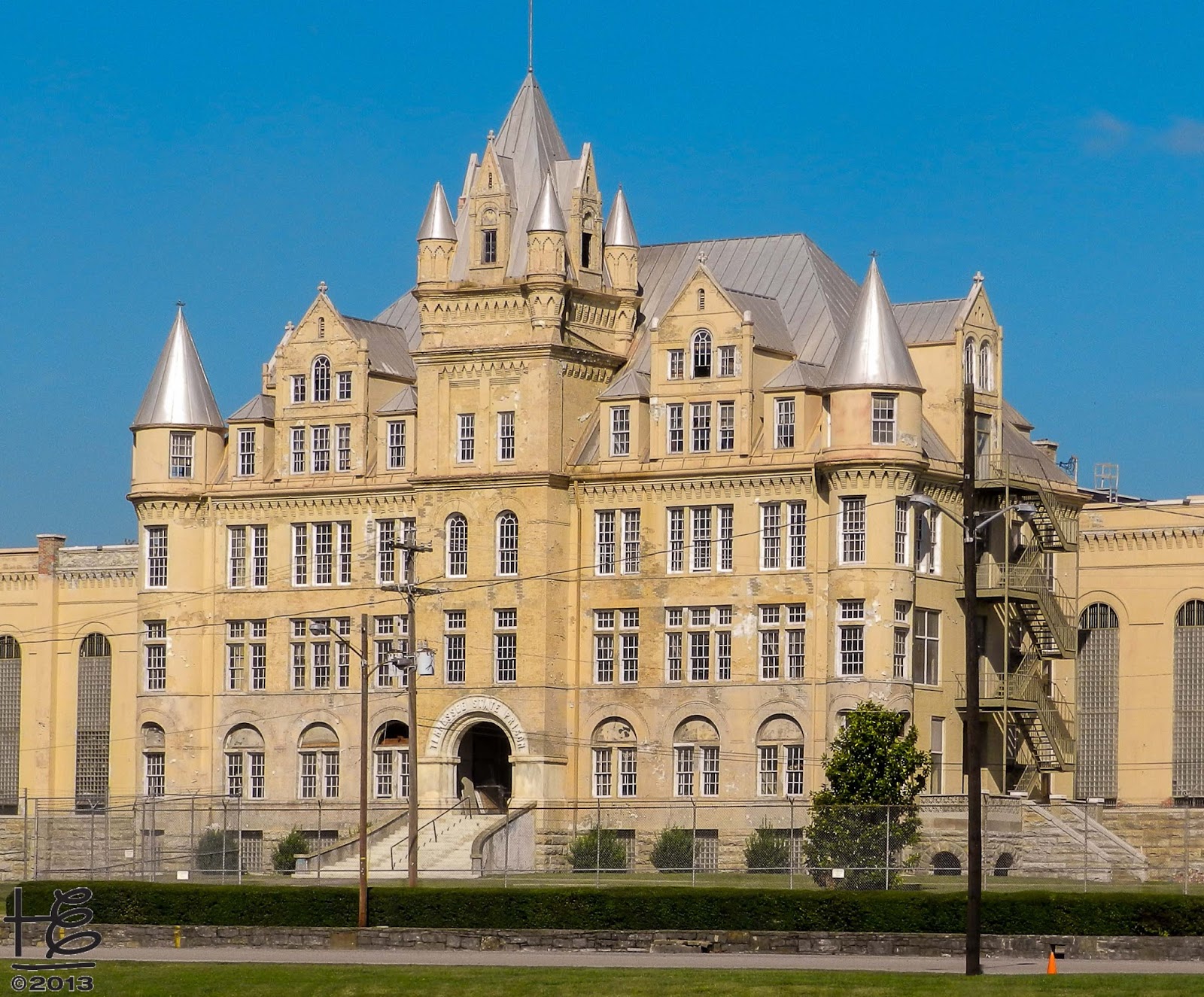
Closed TN State Prison
(filming site for The Green Mile)
Federal and state prison systems are a strong potential labor and facility resource for Recycling Refinement systems in the development phase. Within RR systems, existing recycling practices are evolved to maintain maximum material value with minimal energy expended.

Often prison grounds, both inside and outside the fence, contain underutilized buildings that may serve as recycling centers. With a captive pool of inmates eager to work, prisons are staged for promising public | private partnerships grounded in the WE Consciousness, where all parties benefit. Note the WE Consciousness was introduced in the ZWA Blog post, Zero Waste is a Team Sport.

When The Ohio State University achieved their incredible 98.2% recycling rate in the 2012 football season game, the state prison sorted, baled and sold the stadium-generated material.The OSU Zero Waste video, produced by the Ohio Department of Agriculture, is a recycling program overview including the prison partnership.

Baled plastic film rebates
rival to exceed cardboard revenue
As documented in the ZWA Blog post, Source-Separation is Key to Maximum Recycling PROFITS, Elemental Impact is a strong proponent of on-site source-separation at the material generation point. Several years ago astute industry leaders launched a trend where in-house waste & recycling centers evolved into recycling profit centers; thus, the impetus of new industry standards. 

Adopting industry operating practices that improve the bottom line is necessary to maintain a competitive market edge and in alignment with management's fiduciary responsibility to corporate stockholders. The U.S. Zero Waste Business Council, along with many industry trade associations, share recycling success stories and support those embarking on the zero waste journey.

Ei is embarking on a city-wide recycling network template that makes solid business sense for the entire value chain. Cost-effective labor and warehouse space are key to the network development. The ZWA Blog If it was easy, it would already be done!, introduces the city-wide plastic film recycling template pilot, a first step in an overall recycling network.

UNICOR | Ei 2011 lunch
With a federal penitentiary located near downtown Atlanta, Ei hopes synergies are abundant with UNICOR -  a division of the Federal Prison Industries that seeks to employ and provide job skills training to the greatest practicable number of inmates confined within the Federal Bureau of Prisons. The Ei | UNICOR strong relationship began with Ei founder Holly Elmore met Bob Tonetti - UNICOR's Recycling Business Group general manager - at the 2010 Georgia Recycling Coalition Conference. 

In August 2011 the Ei Team, including Ei Chair Scott Seydel, met with the UNICOR folks in Washington D.C. and laid the foundation for future projects. Ei strategizes with UNICOR on expanding penitentiary recycling programs beyond the current electronic recycling offered. 

UNICOR program manager Frank Hurst and Holly keep in close contact, both excited to discover a way to work directly together. In July 2013 Frank referred his long-time UNICOR co-worker and friend Fred Roach to Holly. Retired from UNICOR after 26 years of service, Fred joined TRICOR - Tennessee's prison employment agency. Here is a quick TRICOR overview:

TRICOR tractor @ dairy farm
Mission: To prepare offenders for success after release.

Vision: We are a preferred source of skilled labor for the workforce in Tennessee.


Core Values:

  • Customer-focused culture
  • People first
  • Lead by example
  • Right today, better tomorrow
  • Self-sufficiency

After several months of conference calls and strategy sessions, a group of Ei Partners, Supporters and pals converged on TN in late September to meet Fred, tour TRICOR prison operations and explore synergies | opportunities.

First on the agenda was an introductory meeting in Chattanooga with TRICOR & Ei Supporter Republic Services to plant seeds for future discussions. Boyd Leake of Community Environmental joined Holly and Fred for dinner to prepare for the following two tour days.

The dairy farm cattle were
healthy and happy
The next morning the entourage visited the TRICOR Dairy Farm on the Bledsoe County Correctional Complex in Pikesville. With 180 cattle, the hardworking dairy farm supplies milk for the approximately 20,000 inmates in the statewide system. After the farm tour, the group toured the recycling practices in place at the prison along with the food waste composting site.

Following the BCCC tour, Ei Partner Amy Moreland of Heritage Interactive Services joined the group for dinner in Nashville to discuss the dairy farm tour along with an overview of the next day's multiple tours. Nathan Jones of American Textile Recycling Services attended the dinner to learn how textile recycling may play a role in future programs.

In the morning the group toured the impressive Cook Chill plant that prepares the food for the entire prison system. Executive chef | production manager Nigel Cox runs an efficient operation and ensures maximum quality food is prepared within the limited budget. Although cardboard recycling is in-place, there are abundant opportunities to create a recycling profit center at the Cook Chill plant.

Next was a visit to TRICOR’s TN Logistics Center where the state auto license tags are produced by female prisoners. The energy in the facility was amazing - it was evident the woman were appreciative of their employment status.

Boyd, Amy & Fred
@ tours end
The final official tour was the TRICOR scanning center within the TN Prison for Women where the group observed the ladies dismantling and scanning a vast inventory of documents for electronic storage. In addition, a call center is set-up and awaiting a contract with private enterprise to begin operations. In-prison culinary and cosmetology programs help provide the female inmates with valuable skills for employment upon their release.

With the tours complete, the group dined at the Nashville Farmers Market  where they discussed next action steps. Fertile seeds are planted for endeavors on many fronts within and in partnership with the TN prison system.

For the a pictorial recap of the impressive tours, visit the Ei FB album, 09-13 TRICOR TN Tours.

Prison systems are an opportunity to create powerful private | public partnerships where ALL benefit, especially the inmates. Prison employment programs prepare released inmates with the skills necessary to live a fruitful, law-abiding life. The third leg of the sustainability stool - social consciousness - provides the program stability required for success.

Saturday, October 5, 2013

Winning Recycling Seasons: Team Work Required!

As the Sustainable Food Court Initiative Event Venue Pilot, the Georgia Dome is committed to the teamwork necessary for Atlanta Falcons' winning recycling seasons. Fact finding tours to witness current practices in action are an excellent first step to refining recycling practices closer to the coveted zero waste threshold.

Falcons Tailgate recycling dumpsters
Georgia World Congress Center Authority sustainability director Tim Trefzer hosted a front and back-of-the-house GA Dome game day recycling tour for Elemental Impact founder Holly Elmore during the September 15 Falcons | Rams game. New Falcons Stadium designers, Carlie Bullock-Jones of EcoWorks Studio & Chris DeVolder of ThreeSixty Architecture joined the fun and informative tour. Beginning with Falcons Landing, the group visited pre-game festivities.

Next on the tour was tailgating in one of the three GWCCA-owned parking lots. While giving away koozies, the Rise Up & Recycle Team circulated throughout the parking lot encouraging fans to recycle. In the 2012 season, Novelis - Falcons recycling partner - provided two brightly colored recycling dumpsters for each parking lot. The colorful dumpsters continue to broadcast a bright recycling message in their second season.

Tim next to the new indoor
recycling bins
New Novelis-provided recycling bins made their debut inside and outside of the stadium at the 2013 season first home game. With fans prohibited from bringing beverages into the Dome, the bins are a haven for valuable aluminum and PET - polyethylene terephthalate, a common plastic used for carbonated beverages and bottled water containers.

A strong zero waste foundation is in place at the Dome, a founding Zero Waste Zones participant. Pump stations are used for condiments with only mayonnaise provided in individual disposable packets, a common containment in food waste for composting streams. Levy Restaurants, the Dome's concessionaire, serves food & beverage in compostable packaging for most items. 

The SFCI Team is exploring solutions for remaining food & beverage "trash" items including the roasted peanut bags. At first glance, either existing products or creative solutions are available for the items.

Event best practices are strong in the GA Dome suites. Levy Restaurants serves food in reusable platters, bowls and chafing dishes along with china plates, stainless flatware, cloth napkins and beverage glassware service. Recycling bins are installed in the back countertop of each suite.

Pre-packaged beverages are
sold in recyclable containers
Pre-packaged game day beverages are served in recyclable material - aluminum & PET. Post game the bowl is cleaned with the beverage containers collected in blue bags for placement in the recycling compactor. Each game approximately 35,000 game programs (pre-game every other seat beverage container is stuffed with a program) and 140,000 promotional flyers (every seat container receives two flyers) are destined for the landfill.  

Although it appears a simple task to collect the program and flyers post-game for recycling, challenges abound. Post-game bowl cleaning is performed via a contracted janitorial service. The janitorial company is only required to separately collect paper products if the task was included as a contract provision during the RFP - request for proposal - process. Another challenge is the constantly changing hourly staff employed to clean the stadium.

Falcons programs &
promotional flyers
Although arduous in the first years, the Portland Trailblazers developed an effective stadium cleaning program. SFCI Team Members  Asean | StalkMarket and NatureWorks worked closely with the Trailblazers on untangling the challenges into success and are eager to share their expertise with the GA Dome.

The tour included a visit to the loading dock area for recycling in action with the cardboard baler, food waste bins for compost collection and the recycling compactor. 

For a tour pictorial recap, visit the Ei FB album, 09-15-13 Falcons Recycling Tour.

Subsequent to the GA Dome tour, Tim and Holly traveled to the Greensboro, GA Novelis aluminum recycling plant. It was impressive to witness first-hand how a can travels through the chipping, baking to remove inks & other contaminants and melting process necessary to make an aluminum ingot. Each batch is tested to ensure specific recipes for the ingot's product destination are followed.

Novelis tour group
Greensboro plant ingots are shipped to a Novelis facility in Kentucky for rolled aluminum production, a raw material in beverage can manufacturing. Once an ingot leaves the Greensboro plant, aluminum cans return to the recycling plant in an average sixty days for yet a another material reuse. 

The SFCI - GA Dome Team is staged for ACTION! At an upcoming home game, team members will "pick" several sections of the Dome for food and beverage waste along with the associated compostable packaging. In addition, food and beverage-related items not compostable will be collected in a separate bag for later analysis. The local composter will place the Dome compostable bags filled with post-consumer food waste in a designated area to monitor it during the decomposition process.

SFCI-GA Dome Executive Team
With the new Falcons Stadium scheduled to open in the 2017 Season, the SFCI - GA Dome Team intends to work closely with the new stadium design team. Lessons learned during the Dome's recycling refinement may be incorporated into the new stadium design. With all parties playing well together, the first Falcons Stadium season is staged for recycling wins before, during and after games and other events.

... and by the way, the Falcons won the September 15 game against the Rams!

Sunday, September 29, 2013

If it was easy, it would already be done!

In pursuit of Recycling Integrity - maintaining maximum material value with minimal energy expended - Elemental Impact is exploring new recycling frontiers. Industry pioneers from the early Zero Waste Zones days are eager to forge new territory while creating industry best operating practices.

A ripened fruit in the proverbial "low hanging fruit tree" is plastic film recycling. Considered a contaminant in single-stream recycling systems, plastic film is landfill destined in most commercial operations, especially at small to moderate generators. Most large generators source-separate their operating by-products, including plastic film, for sale within the commodity markets. 

Scott Lutocka of Piazza Produce
 sitting on a bale of plastic film
For Piazza Produce - the only zero waste foodservice distributor in the nation - baled plastic film rebates rival cardboard as the top revenue producer. To learn more about Piazza Produce's impressive zero waste practices visit the ZWA Blog posts, Zero Waste is a Team Sport and Source Separation Key to Maximum Recycling Profits.

Ei's plastic film journey began in 2011 when Simon Property Group joined the Ei Partner Program. Synchronistic with Ei and Simon joining forces, the garment manufacturing industry shifted from bulk retail packaging to individual item packaging. RESULT: a tremendous increase in valuable, clean, virgin plastic film going into retailer waste streams. The ZWA Blog post, Simon Property Group Embarks on Zero Waste Initiatives, chronicles the first Simon plastic film recycling meeting during Matt Hupp's - then Simon director of waste & recycling - second Atlanta visit.

In the same time frame Hilex Poly, a global leader in plastic bag manufacturing, and Orwak, a small baler manufacturer, joined the Ei Program. In the next months, Concord Mills - a Simon mall - accepted the invitation to serve as the Sustainable Food Court Initiative Event Venue Pilot. The necessary players were in-place to create a shopping mall plastic film recycling template!

Ray Soporowski. Concord Mills
GM, happy @ program launch
Launched with success, the Concord Mills plastic film recycling program was announced in the ZWA Blog post, ACTION: Theme for SFCI Shopping Mall Pilot, post. With an arsenal of lessons learned, the Ei Team was ready to focus on a city-wide plastic film recycling template designed for duplication in metro areas across the nation. 

In simplistic terms, the city-wide game plan is to recruit 10 - 12 industry pioneers who generate a moderate amount of plastic film in their operations. Using a small baler, the pioneers collect and bale plastic film on-site for periodic collection. A local hauler collects and delivers the small bales to a warehouse. The small bales are re-baled into standard size larger bales and stored in an empty tractor trailer. Once full, the plastic film is sold by the tractor trailer load as a raw material to a plastic bag manufacturer. Atlanta serves as the pilot city for the plastic film recycling template.

Within the city-wide template, challenges abound:
plastic film ready for
the baling process
  • Bottom line improvement - Ei commits to programs that make solid business sense for the entire value chain. For the generator, the baler and additional labor investment must be covered by reduced landfill tipping costs and material rebates. Route density is key to minimize transportation costs for the hauler.  
  • Commodity market volatility - Fluctuations in commodity market prices create instability and undue risk within a program. 
  • Small baler infrastructure - As with most markets, Atlanta is void of existing haulers capable of efficient small bale collection.
  • Limited storage - Frequent collection is required as most generators have limited storage areas. Timing the collection routes to meet varying logistical requirements requires team effort among the template participants.
  • Varying plastic film types - The template participants represent a variety of industries, each with a unique mix of plastic film types generated. It is necessary to determine the balance between bale value and energy required to create maximum value among the various film types.
  • Maximizing plastic film tonnage - To justify transporting the tractor trailer to the manufacturer, a minimum of 37,000 pounds of plastic film must fill the trailer. As close as possible to the 44,000 pounds capacity is necessary to maximize value chain benefit.  
  • Small bale size  - Small bales pose three challenges: 1> looser compaction yields lower pounds per bale,  2> inefficient stacking in the trailer results in lower pounds per trailer load, and 3> additional unloading labor at the manufacturer due to increased number of retrievals for fewer pounds. 
The first plastic film recycling
meeting with FreshPoint
For the Atlanta pilot, a stellar team of Ei Partners and Supporters are working together to unravel the challenges into a well-structured yet flexible template staged for duplication. The committed team includes:
  • M-Pass - a recycling and materials management consulting company- serves as the pilot foundation. Lorraine White, M-Pass founder & president, plans to use M-Pass assets to collect, re-bale and store the plastic film at her warehouse during the pilot.
  • Orwak - manufacturer of small balers - agrees to provide a complimentary baler for 90 days at the pilot launch.
  • FreshPoint - national produce distributor with an Atlanta distribution center - accepts the pilot baler with the agreement to welcome fellow template participants for baler demonstrations.
  • Hilex Poly - a global leader in plastic bag manufacturing - contracts with M-Pass to purchase the baled plastic film by the tractor trailer load at a consistent price.
Additional pilot participants are in the introductory stage with anticipated commitments in the near future. 

The city-wide plastic film recycling template is in the midst of the creative chaos necessary to bring forth the solid structure within a successful program. Ei founder Holly Elmore knows this energy state well as the creator of the Zero Waste Zones and the Sustainable Food Court Initiative. A common phrase Holly uses during this stage is "If it was easy, it would already be done!"

Saturday, August 24, 2013

Atlanta: Host City for 2014 U.S. Zero Waste Business Council Conference

Laura @ podium proclaiming:
"Recycling is Sexy!"
An early pioneer in the zero waste movement, Atlanta is an ideal host city for the U.S. Zero Waste Business Council third annual conference scheduled for May 7 & 8 at the Westin Buckhead. Atlanta's Eco Warrior Laura Turner Seydel opens the conference as the keynote plenary speaker.


In 2009 Atlanta scored national media attention with the Zero Waste Zones launch. The City Aims for Zero Waste CNN story ran during prime viewing time along with homepage listing during Earth Week 2009. Later in the year, the New York Times front-page article, Nudging Recycling from Less Waste to None, featured ZWZ Champion Steve Simon, Fifth Group Restaurants partner. The Ei Media page includes a complete listing of ZWZ media.

Supported by the Sustainable Food Court Initiative Team, Hartsfield-Jackson Atlanta International Airport included a provision in the 2011 new concessionaire contracts requiring food vendors to use compostable foodservice packaging and separate food waste for off-site composting.


The ZWA Blog post, Atlanta Airport Makes a Bold Sustainable Statement, announces the contract provision. As the SFCI Airport Pilot, the Atlanta Airport received a 2011 Going Green Airport Award - the ZWZ Blog post, Atlanta Airport SFCI Pilot Wins National Award, gives the award details.

In 2012 the National Restaurant Association purchased the ZWZ. With the NRA serving as zero waste stewards, Elemental Impact's focus evolved to recycling refinement based in Recycling Integrity - maintaining maximum material value with minimal energy expended. Atlanta's pioneers are eager to participate in several new innovative platforms. The ZWA Blog posts, GREASE: Activating the Zero Waste Evolution and GREASE: A new frontier filled with economic & environmental promise, expand the definition of waste beyond material and diversion beyond landfill or incineration. 

Atlanta serves as the pilot city for development of a metro-wide plastic film recycling template. Intrinsic in the template is collection, consolidation and market infrastructure creation for moderate plastic film generators.  An aggressive, yet achievable, goal is to showcase the plastic film template at the 2014 USZWBC Conference.


As documented in the ZWA Blog: Powerful Industry Resource & Voice article, the 2011 USZWBC launch established zero waste as vital to business acumen and signaled the Ei "zero waste cheerleader role" was accomplished. The USZWBC mission and vision are grounded in the important role zero waste plays in best corporate operating practices:

Mission: 
The U.S. Zero Waste Business Council mission is to educate, inform and document the performance of Zero Waste Businesses using scientific methods to help businesses and communities become more healthy and sustainable.

Vision:
The U. S. Zero Waste Business Council will create a solid foundation that advances the integrity and credibility of Zero Waste. Zero Waste Businesses save money, are more efficient, manage risk, reduce litter and pollution, cut greenhouse gases, reinvest resources locally, and create jobs and more value for their business and the community.
Ei Ptrs @ 2012 USZWBC Conference
An Ei Strategic Ally, the USZWBC and Ei work closely together to maximize the tremendous synergies between their respective organizations. In June 2011 Ei founder Holly Elmore presented in the hospitality tract at the first annual USZWBC Conference in Costa Mesa, CA. Whether participating as speakers, sponsors and | or attendees, Ei Partners were well represented by BASF, CleanRiver Recycling  Solutions, Heritage Interactive Services and Piazza Produce. 


The ZWA Blog post, U.S. Zero Waste Business Council hosts first rate conference, is an overview of the impressive inaugural conference.  


Ei panel:  Holly, Chris, Scott
& Perry
photo courtesy of Amy Moreland
At the second annual USZWBC Conference in May 2013, Ei orchestrated the Zero Waste is a Team Sport panel of Ei Partners - Scott Lutocka (Piazza Produce), Chris Bradlee (BASF) and Perry Kranias (HMSHost - Tampa Airport). As the conference media sponsor Ei documented the impressive program in three ZWA Blog posts:

For the third annual conference in Atlanta, Ei is the USZWBC Conference Partner as well as media sponsor. Working closely with USZWBC executive director Stephanie Barger and her team, Ei is facilitating introductions to local and regional industry leaders for plenary speaker and break out session presenter invitations. 

With ample planning time, the 2014 USZWBC Conference is staged for stardom. Atlanta is once again ready to shine in the nation's sustainability spotlight. 

... stay tuned for conference updates.

Saturday, August 17, 2013

GREASE: a new frontier filled with economic & environmental promise

airborne grease generated in
stove top high heat saute
Airborne grease and smoke generated as a by-product of kitchen operations are a fire hazard, an environmental concern and costly to clean. Local and national regulations require commercial foodservice operations to install a kitchen exhaust system that evacuates heat, grease effluent, moisture and smoke from the cooking area. Consisting of a hood, baffle filters, ducts and exhaust fan, the kitchen exhaust system must be monitored and maintained in accordance with the codes.


Most kitchen exhaust systems are inspected monthly or quarterly and require a system cleaning due to grease build-up. On average an exhaust system cleaning uses approximately 350 gallons of water along with toxic chemicals necessary to remove grease from the system. In addition the metal baffle filters are generally cleaned nightly, requiring labor, water and toxic cleaning chemicals.


GLF collects grease particulates
before they enter the exhaust system
The post-cleaning greasy, toxic water is released through the operator's grease trap or directly into the local sewer system. Either way the toxic chemicals flow into the local water treatment system or directly into waterways.

Elemental Impact Partner Ellis Fibre (EF) manufactures a patented, disposable grease filter that is placed in front of the baffle filters. EF's Grease Lock Filters (GLF) collect 90% plus of the kitchen grease particulates before entering the kitchen exhaust system. By eliminating grease build-up in the system, the nightly baffle filter cleaning is generally reduced to weekly; the number of third party contracted kitchen exhaust system cleanings are significantly reduced.


HMSHost-operated Pei Wei @
ATL Airport participated in pilot
To substantiate and quantify the water, labor and toxic chemical savings, Ei joined forces with Compliance Solutions International for a three-restaurant, eight-week GLF system pilot. The Water, Chemical, & Cost Savings in Commercial Kitchens By Using Grease Lock Filters, A Report on Restaurant Pilots prepared by Jay Parikh, CSI president is available for download on the Ei GREASE - Grease Recycling & Energy Alternative Solutions for the Environment, Water Use | Toxicity and Reference Materials website pages.

Each of the pilot restaurants realized a cost-savings by installing the GLF system and chose to continue using the filters post pilot. Cost-savings were derived from reduced labor hours, fewer third party contracted cleanings, and reduced water usage and sewage treatment charges. The big winner is the local community who benefits from lower commercial water demand and a reduction in toxic chemicals entering the sewer system and|or waterways.


grease build-up on roofs casues
 costly repairs & maintenance
In addition, the GLF approach to Airborne Kitchen Grease (AKG) enhances fire safety, reduces roof repairs & maintenance caused by grease accumulation, increases HVAC energy efficiency with cleaner fan blades and other moving parts, and lowers the community's carbon footprint due to fewer cleanings by contracted third party kitchen exhaust system maintenance companies.

As a Sustainable Food Court Initiative Atlanta Airport Pilot team member, Ei Partner HMSHost agreed for Pei Wei, located in the International Terminal, to participate in the pilot. Working closely with the HMSHost team, Kyle Mastin - airport concessionaire manager - was impressed with the GLF pilot results at Pei Wei.

At an Ei | Atlanta Airport meeting last week, Kyle showcased the pilot success with enthusiasm for broader use at the airport. The ZWA Blog post, GREASE: Activating the Zero Waste Evolution, introduces the GREASE task force and mentions the airport's interest in assessing the grease generated at the terminal concessionaires along with potential on-site energy options.


GREASE Team @ ATL Airport
In the ZWA Blog post, Zero WATER Waste: more than a goal, a necessity, Ei set the foundation for launching the Water Usage | Toxicity focus area. Within the post, the GLF system is introduced along with a grease scenario and system overview.


As a proactive solution to AKG, Ei intends to support the widespread use of the GLF in commercial kitchens with a three-tier approach:

  1. Installation of GLF systems - goal is to establish a metrics tracking system to quantify the economic and environmental impact for the foodservice operator and the community at-large.
  2. Certification of filter compostability - filters are made of lambs wool with no metal; EF intends to pursue the ASTM Standards testing required by BPI in their compostable packaging certification program.
  3. Utilization of grease captured in filters - grease is valuable in waste to energy technologies; determine how to best use the grease captured in the filters, whether extracted or within the filters.
GREASE is entering a new industry frontier with Ei leading the charge. Stay tuned as Ei determines the economic benefits, substantiates the environmental stewardship and develops an industry-wide action plan for kitchen exhaust system grease. EXCITING TIMES, indeed!

GREASE: Activating the Zero Waste Evolution

G.R.E.A.S.E.
Grease Recycling & Energy Alternative Solutions for the Environment 

When the Zero Waste Zones launched at the acclaimed February 2009 press conference, the collection of spent grease for the local production of biofuel was one of the program's participation criteria. Spent grease is used kitchen fryer oil, often referred to as yellow grease. At the time, meeting the criteria was easy. 

The Southern Alliance for Clean Energy had an established grease collection system complete with a retail fueling station for their locally produced biofuel. For an overview of the 2009 SACE biofuel operations, watch the popular CNN video: City Aims for Zero Waste.

In 2010 the Energy Tax Credit renewal was delayed causing strife within a fragile, emerging industry. Most of the Atlanta market biofuel production facilities closed along with the SACE retail station. For Elemental Impact, the scenario revealed the ZWZ Criteria was not grounded in solid economics; the biofuels industry seemed dependent on the Energy Tax Credit for economic sustenance.

Working closely with SACE, Ei launched GREASE - Grease Recycling & Energy Alternative Solutions for the Environment, a task force to address the biofuels criteria viability. First on the agenda was addressing the "local" requirement. With out-of-state options available, Ei expanded local to include facilities within a 500-mile radius.

The spent grease ZWZ Criteria was grounded in highest good use versus landfill diversion. Spent grease is a valuable commodity with foodservice operators receiving rebates for grease collection. Next on the GREASE agenda was to address the final destination; the majority of the spent grease was destined for rendering plants as an ingredient in animal feed.

McKay Johnson of CEB &
Anne Blair of SACE @ opening
To learn first-hand about spent grease destinations, Roy Edwards, Georgia Department of Natural Resources Sustainability Division, and Ei founder Holly Elmore visited the Griffin Industries rendering plant in Ellenwood, GA. The ZWA Blog post, The By-Products of Mass Food Production, is a tour overview.

When the National Restaurant Association purchased the ZWZ in 2012, any revisions to the spent grease program criteria landed in their court. Complete with addressing spent grease destinations, the GREASE task force went into a holding pattern. For details on the NRA ZWA purchase, read the ZWA Blog post, National Restaurant Association Acquires Zero Waste Zones.

In 2012 SACE reopened their Atlanta biofuel retail station in partnership with Clean Energy Biofuels. The ZWA Blog post, Atlanta Retail Biofuel Station Opens, recaps the grand opening and the Ei FB album, 06-21-12 Biodiesel Fueling Station Grand Opening, is a pictorial overview.

grease accumulation in kitchen
exhaust system ducts
Once again working with SACE, GREASE returns to action mode with an expanded grease definition to include the following three types generated in foodservice operations:
  • Spent Grease - used grease from fryers, often referred to as yellow grease
  • F.O.G - Fats, Oils & Grease - grease collected from grease traps, often referred to as brown grease
  • Kitchen Hood Grease - airborne grease accumulated in the exhaust system from kitchen operations
With spent grease addressed, the GREASE Team will focus on FOG and kitchen hood grease. Current destinations are shifting for FOG. Until the recent past, the common FOG destination was direct land application or the landfill. Improved technologies and an expanding biofuels market support "cleaning" FOG with the grease going to biofuel production and food particulates sent for composting or to the landfill.

installed GLS
In the ZWA Blog post, Zero WATER Waste: more than a goal, a necessity, the importance of addressing kitchen hood grease, along with its related water use and contamination, is introduced. Ei joined forces with Compliance Solutions International for a three-restaurant pilot substantiating the Grease Lock System airborne grease collection success. For pilot details, see the ZWA Blog post, GREASE: a new frontier filled with economic & environmental promise.

Understanding the intrinsic kitchen grease value, Hartsfield-Jackson Atlanta International Airport took the first steps in assessing the types, quantities and current destinations of grease generated at the airport concessionaire operations. In August, SACE and Ei met with an airport team to begin the assessment process. 

GREASE Team @ ATL Airpot
As the Sustainable Food Court Initiative Airport Pilot, the Atlanta Airport is an industry leader in adopting sustainable practices for its food court and restaurant operations. 

In 2011, the Atlanta Airport won a Going Green Airports Award for the groundbreaking compostable packaging provision in the new airport concessionaire contracts. The ZWA Blog post, Atlanta Airport Makes Bold Sustainable Statement, announces the new contract provision and the Atlanta Airport SFCI Pilot Wins National Award post is an overview of the prestigious award.

With GREASE reactivated, the definition of "waste" in zero waste expands beyond traditional recyclable material to include grease generated in commercial foodservice operations. Water usage in commercial operations is another expanded zero waste component. Diversion rates will soon broaden from "diversion to landfill" to sewer systems and other waterways. The Zero Waste Evolution is activated!