Search This Blog

Showing posts with label Source-Separated Materials Recycling Template. Show all posts

Tuesday, March 3, 2015

Remember: If it was easy, it would already be done!

single-stream recycling
delivered to MRF for separation
Within Elemental Impact's (Ei) Recycling Refinement platform a Total Materials Management Approach (TMMA) - evaluating the entire waste | recycling stream as one revenue / cost center - is used. The stated objective is true zero waste with a strong focus on ultimate material destination and the remaining "trash" within the stream. Materials with solid end markets (e.g. aluminum, mixed paper, certain plastics) subsidize more challenging streams generated in operations.
 
Until recently zero waste measurement was quantified as diversion rates from the landfill without final destination consideration. Known for high levels of contamination, single-stream recycling - often the only recycling option available for the corporate community - results in a high percentage of recyclable items landfill destined. Thus, “true recycling rates” are frequently inflated with single-stream recycling programs.
 
Note effective single-stream MRF – material recovery facilities – separation is limited by the contamination in the delivered material. Published reports substantiate curbside single-recycling programs often contain significant contaminates, which may then pollute the corporate recycling delivered to the MRF.


First source-separated aluminum
bale at Georgia Dome
In September 2013, the ZWA Blog article, If it was easy, it would already be done, announced the  plastic film recycling template that segued into the Source-Separated Materials Recycling Template (S-SMRT). With the Georgia Dome | Georgia World Congress Center (GWCC), the Sustainable Food Court Initiative - Event Pilot, stepping forward as the template Lead Pioneer, Atlanta was designated for the city-wide S-SMRT pilot. 

S-SMRT targets moderate material generators whose current recycling option is single-stream recycling. 

In simplistic terms, S-SMRT encompasses the TTMA with the following steps:
  • Generators source-separate material on-site and compact into mini bales.
  • Hauler collects bales for transport to the recycling center.
  • Recycling center associates track material received by type | generator, re-bale into standard sized bales, and store in a tractor trailer by material type until full.
  • Hauler sells material directly to a manufacturing | recycling end destination and pays rebates to generators based on their respective percentage of the load sold.
  • Ei oversees the system to ensure the entire value chain makes a reasonable profit.
Financial template success is grounded in two factors: CLEAN MATERIAL & VOLUME. The template tagline is:

Contamination is a Mistake!

The ZWA Blog article, Total Materials Management Approach, gives an in-depth overview of the approach along with a S-SMRT update as of the early December publication. 

Andrew Lantz loading
bales onto box truck
On December 17 the S-SMRT team arrived at the Ga Dome loading dock with an empty box truck to collect the baled aluminum and plastic PET bottles generated during the 2014 Falcons Season. Destination: the Atlanta Penitentiary, the S-SMRT recycling center, to re-bale the material into standard-sized bales.

The trial run was seamless as the UNICOR - federal prison system employment arm - managers along with inmates greeted the team with enthusiasm. Pallets were weighed empty and then weighed again loaded with material bales; several individual mini-bales were weighed to estimate an average. Next the material was transported for compaction into standard-sized bales.

At the trial, the only significant challenge was the Penitentiary baler produced a loosely compacted aluminum bale that lost bottles as moved and was approximately 50 pounds underweight. Compaction issues are easily remedied via: 1> adjusting the machine compaction setting, 2> repairing the machine or final remedy 3> purchasing a new machine. It was rewarding to know the main challenge was one with an easy solution.

loosely compacted first standard
sized bale 
Other template challenges include shifts in Ei Partner staff and | or business model. Beyond Ei Partner associates flowing with empowering career choices, the designated hauler shifted their business model and will no longer serve at the template's core. Though a shock, the simplistic genius of S-SMRT is the hauler role merely requires a box truck, qualified drivers and a relationship grounded in trust with hauler management.

At the Georgia Dome, labor sources and division of time to source-separate material proved a challenge during the first pilot year. Though frustrating, the entire S-SMRT Team is committed to long-term success. Pioneers know immediate disappointments are necessary to create a flexible foundation built to endure many renditions while evolving into a proven format.

Tim shows the tremendous
mixed paper volume potential
In the first year, source-separation was limited to aluminum and PET plastic bottles. Next year the intent is to add the significant amount of mixed paper from event programs, marketing material and other sources. In addition, GWCC director of sustainability Tim Trefzer intends to explore including GWCC convention and event material in the source-separation process. As the nation's fourth largest convention center, evolving material management practices is a monumental task, one with significant impact.

By the Atlanta Falcons 2015 Season at the Georgia Dome the goal is to recruit additional Lead Pioneers within the downtown convention district. Route density is key for the hauler's financial success. 

The Ei FB album, Source-Separated Materials Recycling Template, building a city-wide network, is a pictorial recap of the template from its plastic film recycling inception to current work-in-progress.

Simplicity is the common thread throughout the S-SMRT. New operating practices are low tech in nature with a mini-baler in general the only necessary purchase. Additional labor is required to source-separate and bale material on-site; thus, "green jobs" are created with the overall bottom line improved - a multiple win!

Though simple, the S-SMRT is NOT easy. Yet Remember: If it was easy, it would already be done!

Tuesday, December 9, 2014

Total Materials Management Approach

Within Elemental Impact's (Ei) Recycling Refinement platform, a Total Materials Management Approach - evaluating the entire materials stream in one cost / revenue center- is used. The stated objective is true zero waste with a strong focus on ultimate material destination and the remaining "trash" within the stream. Materials with solid end markets (e.g. aluminum, mixed paper, certain plastics) subsidize more challenging streams generated in operations.

Ei Chair Scott Seydel @ MRF
Until recently zero waste measurement was quantified as diversion rates from the landfill without final destination consideration. Known for high levels of contamination, single-stream recycling - often the only recycling option available for the corporate community - results in a high percentage of recyclable items landfill destined. Thus, “true recycling rates” are often inflated with single-stream recycling programs.

Note effective single-stream MRF – material recovery facilities – separation is limited by the contamination in the delivered material. Published reports substantiate curbside single-recycling programs often contain significant contaminates, which may then contaminate the corporate recycling delivered to the MRF.

The Source-Separated Materials Recycling Template (S-SMRT) targets moderate material generators whose current recycling option is single-stream recycling. Grounded in on-site material source-separation and baling, the S-SMRT is developing a city-wide material recovery template with Atlanta serving as the pilot city.

When evaluating recycling programs, organizations generally prepare a business case or cost-benefit analysis to ensure there is a reasonable ROI – return on investment – for the particular material stream. Hard-to-recycle items or those with little to no ROI are landfill destined without further consideration. 

S-SMRT epitomizes a common Ei phrase:
Ei is a creator, an incubator.
Ei determines what could be done that is not being done and gets it done.
Ei brings the possible out of impossible.
Ei identifies pioneers and creates heroes.

In simplistic terms, S-SMRT encompasses the Total Material Management Approach with the following steps:

GWCC Orwak baler - the
workhorse in the S-SRMT
  • Generators source-separate material on-site and compact into mini bales.
  • Hauler collects bales for transport to the recycling center.
  • Recycling center associates track material received by type | generator, re-bale into standard sized bales, and store in a tractor trailer by material type until full.
  • Hauler sells material directly to a manufacturing | recycling end destination and pays rebates to generators based on their respective percentage of the load sold.
  • Ei oversees the system to ensure the entire value chain makes a reasonable profit.
Financial template success is grounded in two factors: CLEAN MATERIAL & VOLUME. The template tagline is:

Contamination is a Mistake!

Ei Partner M-PASS Environmental serves as the S-SMRT hauler and intends to create a turnkey option for the next tier of template pioneers. With M-PASS associates baling the material there is strong control over the quality of material sent to the recycling center.

S-SMRT is an evolutionary process. The 2011 Atlanta Airport milk jug recycling pilot, initiated by Ei Partner HMSHost, served as the early template catalyst. The ZWA Blog article, Milk Jugs Recycled at the Atlanta Airport, gave an overview of the S-SMRT first step.

Louis Herrera educating
Matt Hupp on plastic film @ CM
In 2012, the Sustainable Food Court Initiative (SFCI) - Shopping Mall Pilot at Concord Mills launched the first shopping mall plastic film recycling pilot; the second step in the template foundation. Ei Partner Louis Herrera of Hilex Poly was the visionary and plastic film educator during the pilot development. The ZWA Blog article, ACTION: Theme for the SFCI Shopping Mall Pilot, announced the plastic film recycling pilot.

A third significant template step was the Fresh Point ATL (FPA) plastic film recycling pilot. In the ZWA Blog article, Plastic Film Recycling: A New Frontier, the plastic film recycling history, facts and the FPA pilot were detailed. Ei's first directed video, Ei Plastic Film Recycling Pilot at FreshPoint ATL, debuted in the ZWA Blog article, Plastic Film Recycling Template Video Published.

When the Georgia World Congress Center joined the S-SMRT in spring 2014, the template immediately expanded beyond plastic film to total materials - a HUGE fourth step in template development. 

The June Atlanta Ei Partner Tours were designed as a two-day experiential strategy session for further template development. Local end market destinations Novelis and Pratt Industries hosted the first tours day. Ei Partner Novelis - the world's largest aluminum manufacturer - has an aluminum recycling plant less than 100 miles from Atlanta.

Ei Partners ready to tour
the Novelis recycling plant
On the second day tours Tim Trefzer, GWCC director of sustainability, welcomed the Ei Partners to the GWCC for a presentation of successes to date, including the 2013 "Greenest" Final Four hosted at the Georgia Dome. A back-of-house tour of recycling practices in-place followed the formal presentation. 

Michael Cheyne, Atlanta Airport director of asset management and sustainability, and Scott Jenkins, New Falcons Stadium general manager, joined the lunch hosted by NatureWorks and gave invigorating updates. Note the Atlanta Airport serves as the SFCI - Airport Pilot and the Georgia Dome is the SFCI - Event Venue Pilot.

The IMPACT Blog article, Atlanta Ei Partner Tours, chronicles the powerful tours.

Novelis is the Atlanta Falcons recycling partner and key to S-SMRT success. Due to contamination levels at the local MRF aluminum generated at the Georgia Dome (30,000+ aluminum beer bottles at a Falcons home game) does not meet Novelis aluminum quality standards. With their ambitious 80% recycled content goal, Novelis is "hungry" for clean aluminum and a strong S-SMRT partner.

The VERY first aluminum
baled at the GWCC
With clean material addressed, the volume is achieved through expanding template pioneers to a second tier, followed by additional tiers. Cindy Jackson, Georgia Tech recycling & waste director, attended the Atlanta Ei Partner Tours and is ready for the template business case. 

Ei Partner Keter Environmental Services holds the waste & recycling contracts for three Class A Atlanta malls. The intent is for the three malls to join the S-SMRT as template pioneers in early 2015.

Invitations to additional template pioneers - all prominent industry leaders - are slated for early 2015.

For a S-SMRT work-in-progress overview, visit the following ZWA Blog articles:
Ei Team @ GA Dome to
scout material @ a Falcons game
The S-SMRT website page lists the stellar Ei Team comprised of Lead Pioneers, Infrastructure and End Market Partners.

With an initial focus on the high value materials - aluminum, mixed paper and certain plastics, the S-SMRT is destined to generate profit for participates. These profits are designated to cover costs associated with challenging material streams such as food waste.

Synergistic in timing, the SFCI 2014 | 2015 stated focus is post-consumer food waste. The ZWA Blog article, SFCI targets post-consumer food waste, announces the focus.

M-PASS Lorraine White
"picking the bowl" for food waste
Back-of-the-house (pre-consumer) food waste industry practices were perfected by early zero waste pioneers. Front-of-the-house (post-consumer) food waste remains a recycling frontier for two main reasons: 1> necessary shift in consumer-facing packaging to create clean food waste streams and 2> consumer responsibility for food waste disposal. 

S-SMRT profit is earmarked to cover the expense of implementing a post-consumer food waste collection program at pioneer facilities with foodservice operations. Anticipated program costs include shifting to compostable food & beverage packaging, purchasing or modifying existing collection bins, recycling station signage, and an employee training system.

Once food waste is addressed, the game plan is to evaluate remaining trash and work within the supply chain for solutions. Supply chain engagement is critical to achieving true zero waste. The ZWA Blog article, Supply Chain Critical to Zero Waste Success, introduces the supply chain role in successful recycling programs along with solid examples.

A Total Materials Management Approach to recycling programs is a journey well on its path. Yet challenges abound for the Ei Team to unravel into success. Stay tuned for tales from the adventure!

Monday, August 18, 2014

Sustainability in ACTION at the Georgia Dome

The Georgia Dome (Dome) - home to the Atlanta Falcons - is exploring avenues to refine their impressive recycling practices to new dimensions. As a Founding Zero Waste Zones (ZWZ) Participant, the Dome built a strong recycling foundation when the ZWZ launched in February 2009. The ZWA Blog article, Refining Recycling Practices at the GA Dome, gives an overview of the Dome's recycling history and future commitments.
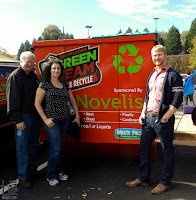
Ei team @ Novelis recycling
dumpster in tail gate lots
In spring 2012, the Dome accepted the invitation to serve as the SFCI Event Pilot.  Along with the Georgia World Congress Center – fourth largest conference center in the nation – and 20-acre Olympic Centennial Park, the Georgia Dome is one of three facilities under the state-owned Georgia World Congress Center Authority. Tim Trefzer - GWCCA director of sustainability - oversees the impressive sustainability accomplishments, including zero waste and well beyond, for the three facilities.

The SFCI - Dome announces the following 2014 Falcons season goals:
  1. Implement a post-consumer food waste collection program
  2. Source-separate material generated for on-site produced mini-bales
  3. Expand game day tailgate recycling initiatives in the GWCC-owned parking lots; explore recycling possibilities at privately held parking lots. 
Establishing baselines | fact finding for the business model development are the first action steps and timing is impeccable with the August pre-season Falcons home games. 

Nov 10 SFCI-dome team
"picking the bowl"
Fact finding for the post-consumer food waste collection program began on November 10, 2013 when the SFCI Team "picked the bowl" post-game for food waste and compostable items. The team collected approximately 130 pounds of compostable material in 13 bags, which were delivered to a permitted commercial composting facility by SFCI co-chair Doug Kunnemann of NatureWorks and Elemental Impact founder Holly Elmore. Great news: the material placed at the end of a windrow composted well!

The Refining Recycling article referenced above includes details on the November 10 game activities.

Continuing the fact finding that began in November, the SMAT - Sustainable Materials ACTION Team - attended the August 8 Falcons pre-season game. With the November game findings grounded in collecting compostable items, the August game mission was focused on identifying contaminants in the food & beverage packaging served at the Dome.

Note the intention is to pilot post-consumer food waste collection on the Club Level for the 2014 season while taking the program to the entire stadium in the 2015 season.

Several seasons ago, Dome concessionaire Levy Restaurants embarked on sustainability practices that laid a solid foundation for the post-consumer food waste collection program. In general condiments are served at pump stations, eliminating the common packet contamination. The Dome suites foodservice uses reusable plates, flatware, napkins, serving platters and beverage cups & glasses and concessions serve food & beverage items in compostable packaging, with a few exceptions.

SMAT post-game @ Dome
Under the direction of SMAT chair Sarah Martell of Innovia Films, team members Rick Lombardo of Natur-Tec, Wendell Simonson of Eco-Products and Grant Braasch of NatureWorks toured the Club Level concessionaire operations scouting for contaminants. 

Once the team reconvenes for a recap meeting, Sarah will draft a report for Tim, Holly and Doug. An outstanding item is to determine if pre-season concession service mirrors season service. An anticipated challenge is packaging used by Levy's sub-contractors at games. At the November game, the team found specialty nuts, cotton candy, chips | peanuts and yogurt containers are the main contaminants when picking the Dome general seating for compostable items.

In addition to post-consumer food waste, the pre-season Falcons games are the platform for the on-site source-separated material model business case. In a nutshell, the model consists of moderate generators using mini-balers to source-separate material into bales, which are delivered to a recycling center. Once weighed and tracked by participant, the mini-bales are aggregated by material into standard mill-size bales. The recycling center stores the bales until ready for sale by the tractor trailer load. Revenue is distributed to participants in proportion to material generated.

GWCC values their cardboard & has
an excellent recycling system
Financial success is grounded in two equally important components: 1> volume and 2> clean material, free of contaminants. For volume, the intent is to recruit Atlanta's zero waste pioneers to once again step into a leadership role. One of the underlying mottos in original ZWZ recruitment was "maximum volume, minimum decision makers." Program participants are required to provide CLEAN material - the tagline is Contamination is a Mistake!

Challenge: no infrastructure exists in Atlanta or most cities to handle mini-bales. Yet mini-balers are essential due to the moderate quantity of material generated. A Dome pilot goal is to substantiate the model improves the bottom line after considering baler cost and increased labor necessary for on-site separation. The model is an prime example of Ei's concept Recycling Integrity - maintaining maximum material value with minimal energy expended.

Creating infrastructure requires aggregating a team of industry pioneers within the entire value chain willing to step beyond "the way it is done" and create new operating practices. The following are the pioneers who stepped forward as industry leaders:

Lead Pioneers:
  • FreshPoint - nation's largest produce distributor
  • GWCC | GA Dome - nation's fourth largest conference center | home to the Atlanta Falcons
  • Georgia Institute of Technology (strong interest with no formal commitment) 
Infrastructure:
 End Markets:
  • Hilex Poly – world’s largest plastic bag manufacturer
  • Novelis – world’s largest aluminum manufacturer with a recycling plant in Greensboro, GA
  • Pratt Industries – world's largest manufacturer of cardboard boxes from 100% recycled content with a mill in Conyers, GA
Scott Seydel filming @FP
The model originated as a city-wide plastic film recycling template announced in the ZWA Blog article, If it was easy, it would already be done, with FreshPoint taking the leading role. Details on the plastic film recycling template were updated in the ZWA Blog article, Plastic Film Recycling: A New Frontier. In March Ei announced a video filmed and edited by Ei Chair Scott Seydel in the ZWA Blog article, Plastic Film Recycling Template Video Published.

... and then Tim gave the big YES for the GWCC participating in the plastic film recycling template via the SFCI - Dome. Immediately, the template expanded from plastic film to include common recycling materials generated at event facilities: PET, aluminum and mixed paper.

To build the baseline, Tim requested a waste and recycling audit after the August 8 pre-season game by the Dome waste and recycling contractor. Although easy to determine the material generated via purchasing documents, the quantity of material separated for recycling versus sent directly to the landfill is necessary for the baseline. Understanding the contamination within the current recycling practices is another baseline component.

David, Tim & Louis in
Dome loading dock
While the SMAT team scouted the Club Level, Tim, Holly along with Louis Herrera and David Bangs of Hilex Poly visited the loading dock to check out existing recycling practices and examine the potential mini-baler site. Once the GWCCA recycling specialist is hired, recycling rates will immediately increase when an experienced person takes ownership of material generated at the three GWCCA properties. The new position is timed impeccably with the source-separated materials recycling pilot launch.

In true team spirit, Roderick Jackson with UNICOR | Atlanta Penitentiary joined the Ei folks at the August 8 game. Roderick must understand how material is generated, baled and transported to the Atlanta Penitentiary to create the most effective recycling center procedures. 

Orwak baler scheduled
for Dome delivery
Next steps are delivery of a trial Orwak two-compartment baler for the Dome pilot in time for the August 23 pre-season game. While the prime August 8 game focus was post-consumer food waste, the August 23 game is source-separated material oriented. Ei Partners Novelis - the Falcons recycling partner - along with M-PASS and Pratt plan to attend the game. 

A primary August 23 game goal is to bale enough aluminum and mixed paper for UNICOR to make two to three standard mill size bales. In addition, it is important to calculate the time required to sort mixed material bags and make a mini-bale for labor estimates within the business case.

Once the baseline and fact finding are complete, it is time for the template vision to get a reality check via a solid business plan. When the financials indicate the model promises bottom line rewards, the team will reconvene to chart the action course to refine the Dome's recycling practices, including post-consumer food waste, on-site material source separation and tailgate recycling.

The Ei Team is living the tagline, Sustainability in ACTION, at the Dome! 

Sunday, September 29, 2013

If it was easy, it would already be done!

In pursuit of Recycling Integrity - maintaining maximum material value with minimal energy expended - Elemental Impact is exploring new recycling frontiers. Industry pioneers from the early Zero Waste Zones days are eager to forge new territory while creating industry best operating practices.

A ripened fruit in the proverbial "low hanging fruit tree" is plastic film recycling. Considered a contaminant in single-stream recycling systems, plastic film is landfill destined in most commercial operations, especially at small to moderate generators. Most large generators source-separate their operating by-products, including plastic film, for sale within the commodity markets. 

Scott Lutocka of Piazza Produce
 sitting on a bale of plastic film
For Piazza Produce - the only zero waste foodservice distributor in the nation - baled plastic film rebates rival cardboard as the top revenue producer. To learn more about Piazza Produce's impressive zero waste practices visit the ZWA Blog posts, Zero Waste is a Team Sport and Source Separation Key to Maximum Recycling Profits.

Ei's plastic film journey began in 2011 when Simon Property Group joined the Ei Partner Program. Synchronistic with Ei and Simon joining forces, the garment manufacturing industry shifted from bulk retail packaging to individual item packaging. RESULT: a tremendous increase in valuable, clean, virgin plastic film going into retailer waste streams. The ZWA Blog post, Simon Property Group Embarks on Zero Waste Initiatives, chronicles the first Simon plastic film recycling meeting during Matt Hupp's - then Simon director of waste & recycling - second Atlanta visit.

In the same time frame Hilex Poly, a global leader in plastic bag manufacturing, and Orwak, a small baler manufacturer, joined the Ei Program. In the next months, Concord Mills - a Simon mall - accepted the invitation to serve as the Sustainable Food Court Initiative Event Venue Pilot. The necessary players were in-place to create a shopping mall plastic film recycling template!

Ray Soporowski. Concord Mills
GM, happy @ program launch
Launched with success, the Concord Mills plastic film recycling program was announced in the ZWA Blog post, ACTION: Theme for SFCI Shopping Mall Pilot, post. With an arsenal of lessons learned, the Ei Team was ready to focus on a city-wide plastic film recycling template designed for duplication in metro areas across the nation. 

In simplistic terms, the city-wide game plan is to recruit 10 - 12 industry pioneers who generate a moderate amount of plastic film in their operations. Using a small baler, the pioneers collect and bale plastic film on-site for periodic collection. A local hauler collects and delivers the small bales to a warehouse. The small bales are re-baled into standard size larger bales and stored in an empty tractor trailer. Once full, the plastic film is sold by the tractor trailer load as a raw material to a plastic bag manufacturer. Atlanta serves as the pilot city for the plastic film recycling template.

Within the city-wide template, challenges abound:
plastic film ready for
the baling process
  • Bottom line improvement - Ei commits to programs that make solid business sense for the entire value chain. For the generator, the baler and additional labor investment must be covered by reduced landfill tipping costs and material rebates. Route density is key to minimize transportation costs for the hauler.  
  • Commodity market volatility - Fluctuations in commodity market prices create instability and undue risk within a program. 
  • Small baler infrastructure - As with most markets, Atlanta is void of existing haulers capable of efficient small bale collection.
  • Limited storage - Frequent collection is required as most generators have limited storage areas. Timing the collection routes to meet varying logistical requirements requires team effort among the template participants.
  • Varying plastic film types - The template participants represent a variety of industries, each with a unique mix of plastic film types generated. It is necessary to determine the balance between bale value and energy required to create maximum value among the various film types.
  • Maximizing plastic film tonnage - To justify transporting the tractor trailer to the manufacturer, a minimum of 37,000 pounds of plastic film must fill the trailer. As close as possible to the 44,000 pounds capacity is necessary to maximize value chain benefit.  
  • Small bale size  - Small bales pose three challenges: 1> looser compaction yields lower pounds per bale,  2> inefficient stacking in the trailer results in lower pounds per trailer load, and 3> additional unloading labor at the manufacturer due to increased number of retrievals for fewer pounds. 
The first plastic film recycling
meeting with FreshPoint
For the Atlanta pilot, a stellar team of Ei Partners and Supporters are working together to unravel the challenges into a well-structured yet flexible template staged for duplication. The committed team includes:
  • M-Pass - a recycling and materials management consulting company- serves as the pilot foundation. Lorraine White, M-Pass founder & president, plans to use M-Pass assets to collect, re-bale and store the plastic film at her warehouse during the pilot.
  • Orwak - manufacturer of small balers - agrees to provide a complimentary baler for 90 days at the pilot launch.
  • FreshPoint - national produce distributor with an Atlanta distribution center - accepts the pilot baler with the agreement to welcome fellow template participants for baler demonstrations.
  • Hilex Poly - a global leader in plastic bag manufacturing - contracts with M-Pass to purchase the baled plastic film by the tractor trailer load at a consistent price.
Additional pilot participants are in the introductory stage with anticipated commitments in the near future. 

The city-wide plastic film recycling template is in the midst of the creative chaos necessary to bring forth the solid structure within a successful program. Ei founder Holly Elmore knows this energy state well as the creator of the Zero Waste Zones and the Sustainable Food Court Initiative. A common phrase Holly uses during this stage is "If it was easy, it would already be done!"